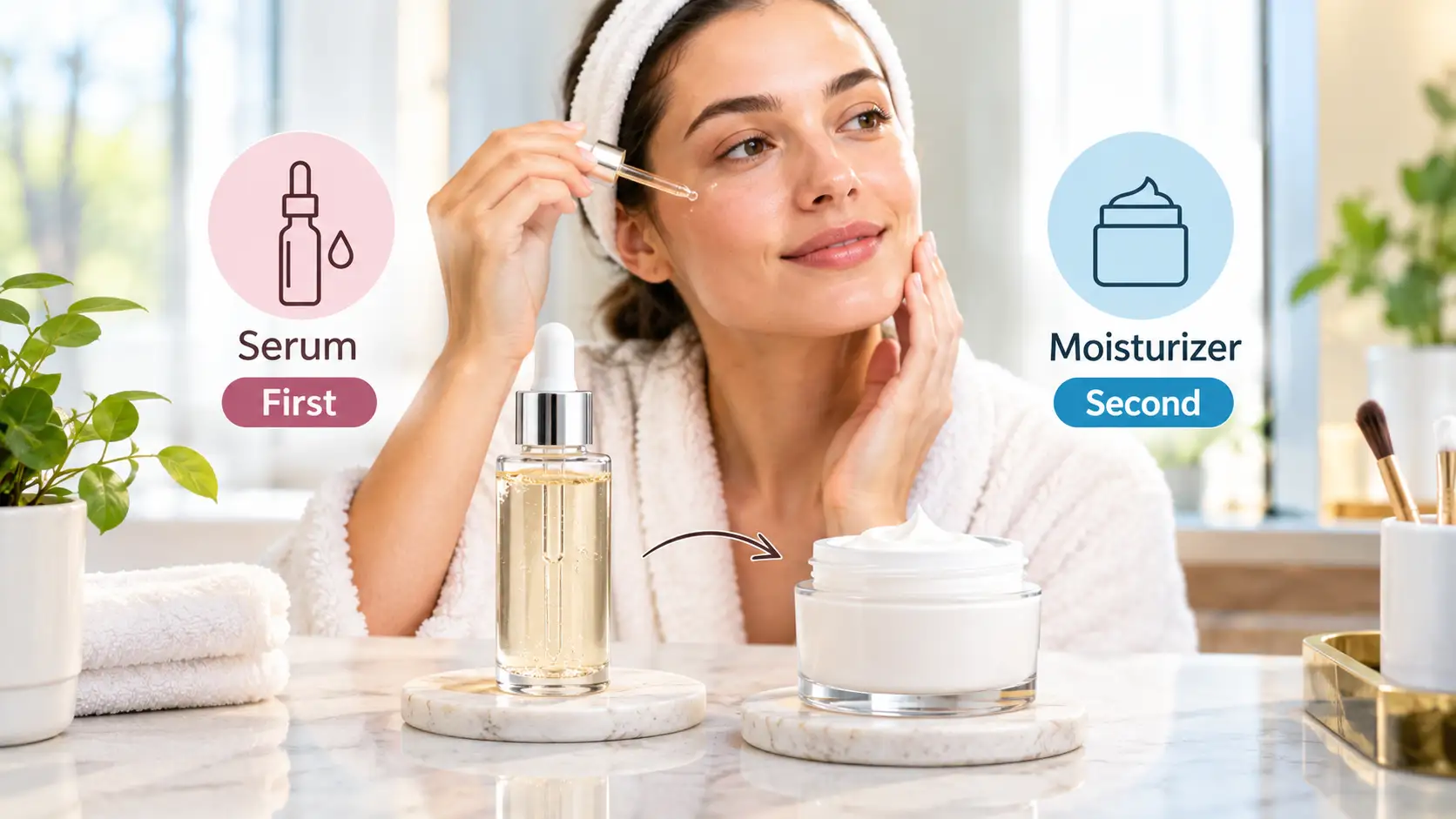
You’ve just bought a new serum, and now you’re standing in front of your bathroom mirror wondering what actually goes on your face first. Serum or moisturizer? You’ve seen both orders mentioned online, and it feels like everyone has a different opinion.
This is one of the most common skincare questions people search for, especially as more people build multi-step routines at home. The confusion makes sense: serums and moisturizers can look similar in texture, come in similar packaging, and both promise hydration or anti-aging benefits. Without a clear rule, it’s easy to apply them in the wrong order and reduce how well your products actually work.
The good news is that there’s a simple, science-backed principle behind skincare layering, and once you understand it, you’ll never have to guess again. Getting this order right isn’t just a minor detail; it affects how well your skin absorbs active ingredients and how effective your entire routine really is.
This article gives you the clear answer, explains the reasoning behind it, and shows you exactly how to build your routine, whether you’re just starting out or refining an existing skincare regimen.
Serum or Moisturizer First Quick Answer
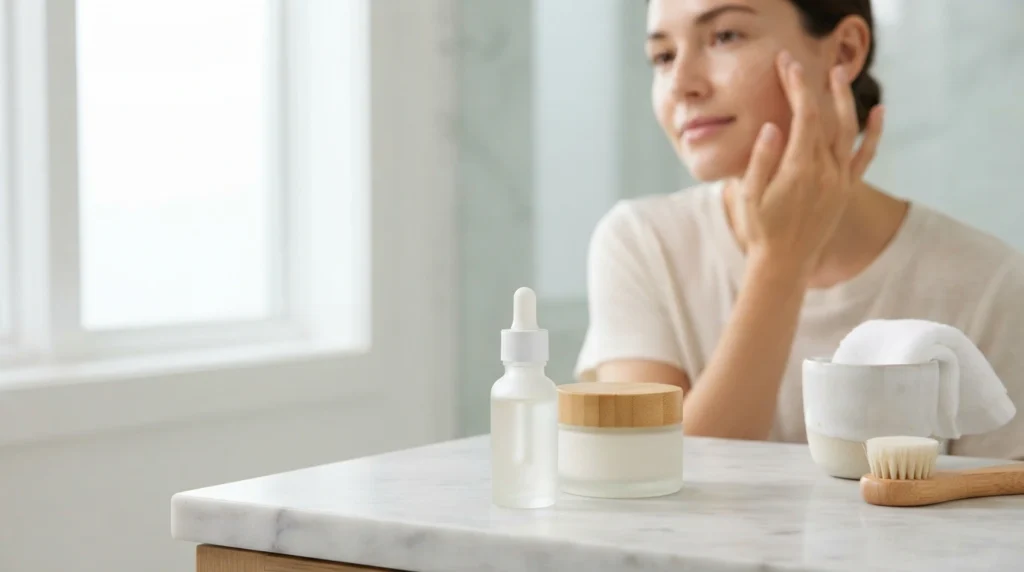
Serum goes first, moisturizer goes second.
The general rule in skincare is to apply products from thinnest to thickest consistency. Serums are lightweight and formulated to absorb quickly into the skin. Moisturizers are thicker and designed to seal in hydration and active ingredients on top.
Example routine order:
- Cleanser
- Toner (if used)
- Serum
- Moisturizer
- Sunscreen (morning only)
Applying moisturizer before serum can create a barrier that blocks the serum’s active ingredients from properly absorbing into the skin.
The Reasoning Behind Skincare Layering Order
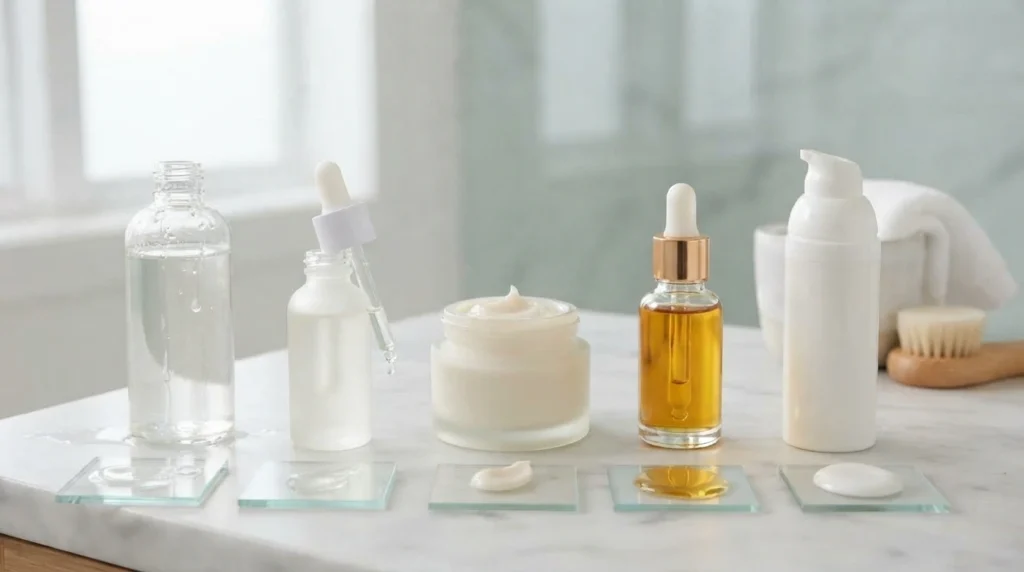
Skincare layering follows a simple principle: apply products from thinnest to thickest texture. This isn’t an arbitrary trend, it’s based on how skin absorbs ingredients.
Serums are formulated with a lightweight, often water- or gel-based texture, packed with concentrated active ingredients like vitamin C, hyaluronic acid, niacinamide, or retinol. Because they’re thin, they can penetrate the skin’s surface quickly and deliver these ingredients where they’re needed most.
Moisturizers, by contrast, are thicker and contain more emollient or occlusive ingredients, oils, butters, or silicones, designed to sit on top of the skin and lock in moisture. If you apply moisturizer first, its thicker texture can create a barrier that prevents the serum underneath from absorbing properly, essentially wasting the serum’s benefits.
This layering principle, thin to thick, extends beyond just serum and moisturizer. It’s also why sunscreen typically goes last in a morning routine, and why toner comes before serum in most routines.
Common Skincare Routine Orders Compared
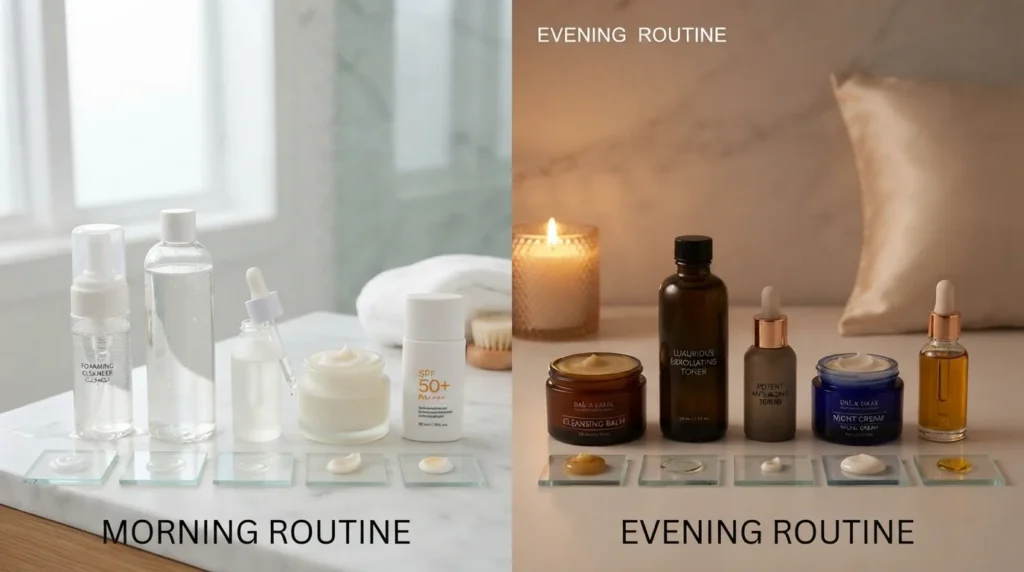
Skincare routines can vary slightly depending on skin type, product formulation, and whether it’s a morning or evening routine.
| Step | Morning Routine | Evening Routine |
| 1 | Cleanser | Cleanser (or double cleanse) |
| 2 | Toner (optional) | Toner (optional) |
| 3 | Serum | Serum |
| 4 | Eye cream (optional) | Eye cream (optional) |
| 5 | Moisturizer | Moisturizer |
| 6 | Sunscreen (essential) | Facial oil (optional, if used) |
Some exceptions exist. For example, certain water-based, extremely lightweight moisturizers or gel formulas may be layered slightly differently depending on brand instructions, but the thin-to-thick rule remains the standard guideline for most routines.
Which Order Should You Use?
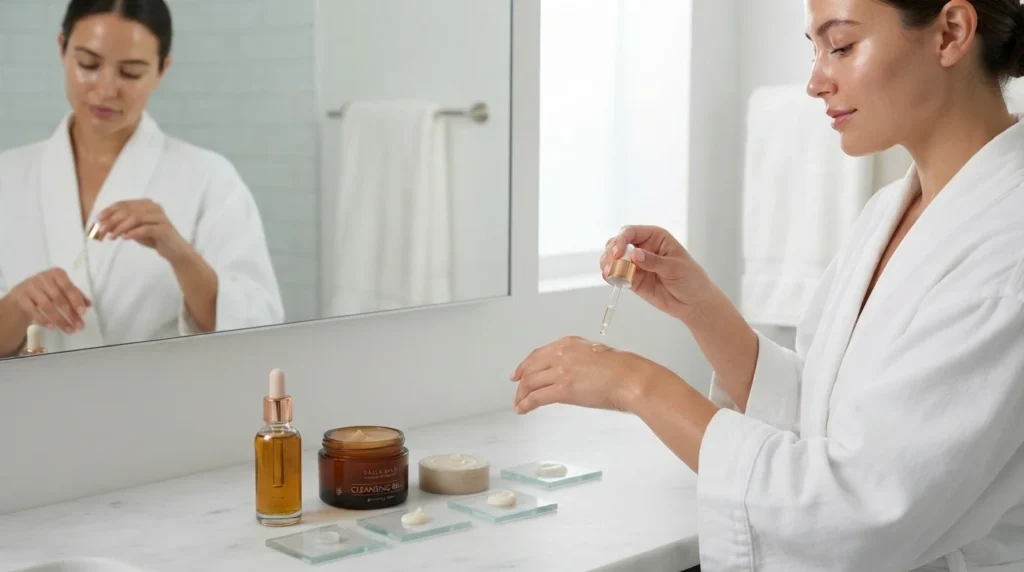
- For beginners building a simple routine: Stick with cleanser, serum, moisturizer, and sunscreen (in the morning). This covers the essentials without overcomplicating things.
- For those using multiple serums: Apply the thinnest, most watery serum first, followed by thicker serums, then moisturizer last.
- For those using active ingredients (retinol, vitamin C, acids): Always check product instructions, since some activities require specific timing or spacing from other products to avoid irritation, but the general serum-before-moisturizer rule still applies.
- For oily or acne-prone skin: Lightweight, gel-based moisturizers still go after serum, even if the moisturizer itself feels light.
Regardless of skin type or product brand, the same core principle applies: lighter products go on before heavier ones.
Common Mistakes with Serum and Moisturizer Order
- Applying moisturizer before serum : This is the most common mistake and can significantly reduce how well active ingredients absorb into the skin.
- Skipping moisturizer entirely after serum : Serums are not designed to replace moisturizer; skipping this step can leave skin under-hydrated, since moisturizer helps seal in the serum’s benefits.
- Applying too many serums without waiting : Layering multiple serums without allowing a few moments between each can dilute their effectiveness; a short wait (30 seconds to a minute) can help absorption.
- Ignoring product-specific instructions : Some brands formulate their products slightly differently; always check the packaging if a specific order is recommended.
- Forget sunscreen as the final step in the morning : sunscreen should always go on last in a daytime routine, applied after moisturizer, not before.
Serum and Moisturizer Order in Everyday Examples
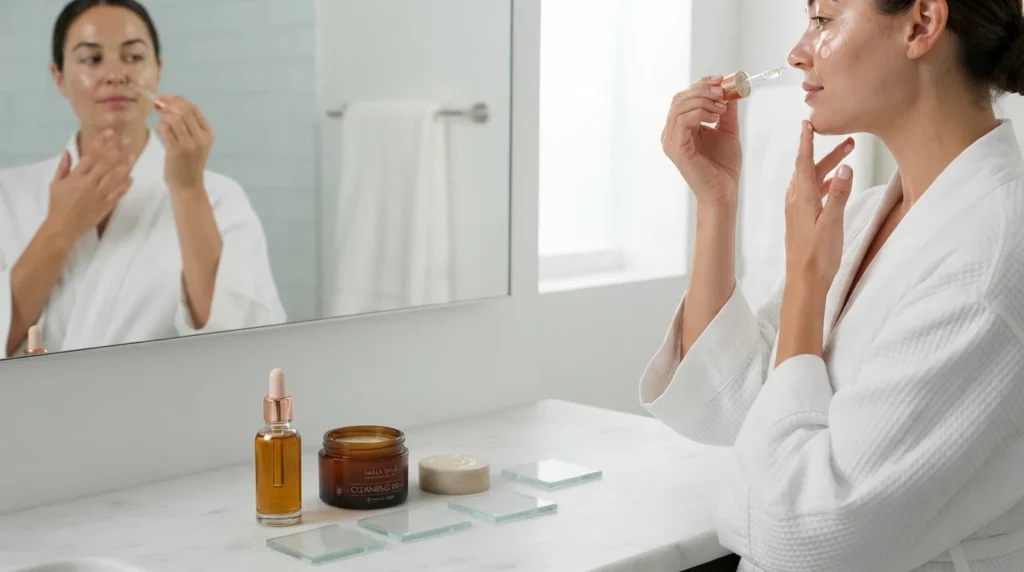
In a skincare blog post: “For best results, apply your vitamin C serum first, allow it to absorb, then follow with a hydrating moisturizer to lock everything in.”
In a beauty brand’s product email: “Pro tip: apply our Hyaluronic Acid Serum before your moisturizer for maximum hydration benefits.”
In a social media skincare tutorial: “Step 3: serum. Step 4: moisturizer. Never skip this order if you want your activities to actually work! ✨”
In a dermatology-focused article: “Dermatologists generally recommend applying skincare products in order of consistency, from thinnest to thickest, to optimize ingredient absorption.”
Serum or Moisturizer First Google Trends & Usage Data
Search interest in “serum or moisturizer first” has grown steadily worldwide, driven largely by the rise of multi-step skincare routines popularized through social media and beauty influencers. The United States, United Kingdom, South Korea, and India all show consistent search volume, reflecting global interest in skincare layering techniques.
Interest tends to spike alongside broader skincare trends, like the popularity of Korean skincare routines, or seasonal changes when people adjust their routines for winter dryness or summer humidity. Beauty and wellness content creators frequently address this question directly, contributing to steady, ongoing search demand rather than sharp seasonal spikes.
Skincare Step Comparison Table
| Product Type | Typical Consistency | Order in Routine |
| Toner | Very thin, liquid | Early (after cleansing) |
| Serum | Thin, lightweight | Before moisturizer |
| Eye cream | Light to medium | Before or after moisturizer |
| Moisturizer | Medium to thick | After serum |
| Facial oil | Thick, occlusive | Last (if used, evening only) |
| Sunscreen | Varies, applied last | Final step (morning only) |
FAQs
1. Should I apply serum or moisturizer first?
Apply serum first, then moisturizer. This follows the general rule of applying products from thinnest to thickest consistency.
2. Why does serum go before moisturizer?
Serums are lightweight and designed to absorb quickly, delivering active ingredients into the skin. Moisturizer, being thicker, is meant to seal everything afterward.
3. Can I skip moisturizer if I use a serum?
It’s not recommended. Moisturizer helps lock in the serum’s benefits and provides its own hydrating or protective properties.
4. Does this order change for oily skin?
No. Even with lightweight, gel-based moisturizers, the same order applies: serum first, moisturizer second.
5. What if I use multiple serums?
Apply the thinnest, most water-based serum first, followed by thicker serums, then moisturizer last.
6. Where does sunscreen fit into this order?
Sunscreen always goes last in a morning routine, applied after moisturizer.
7. Do all skincare brands follow this same order?
Most brands follow the thin-to-thick guideline, but always check specific product instructions, since some specialized formulas may recommend a different order.
Conclusion
The correct order for your skincare routine is serum first, then moisturizer. This follows a simple, widely accepted principle: apply products from thinnest to thickest consistency, allowing lightweight serums to absorb their active ingredients before sealing everything in with a heavier moisturizer.
Getting this order right matters because it directly affects how well your skin absorbs the ingredients you’re paying for. Applying moisturizer first can create a barrier that prevents your serum from working as effectively as it should.
Whether you’re just starting a skincare routine or refining an existing one, remember the core rule: thin products first, thick products last, and sunscreen always as the final step in the morning. Following this simple guideline will help you get the most out of every product in your routine.

Zainab Noor is a passionate content writer specializing in grammar and English language topics. With 2 years of experience, she creates clear, engaging, and SEO-friendly content that helps readers understand grammar, improve their writing skills, and use English with greater confidence.