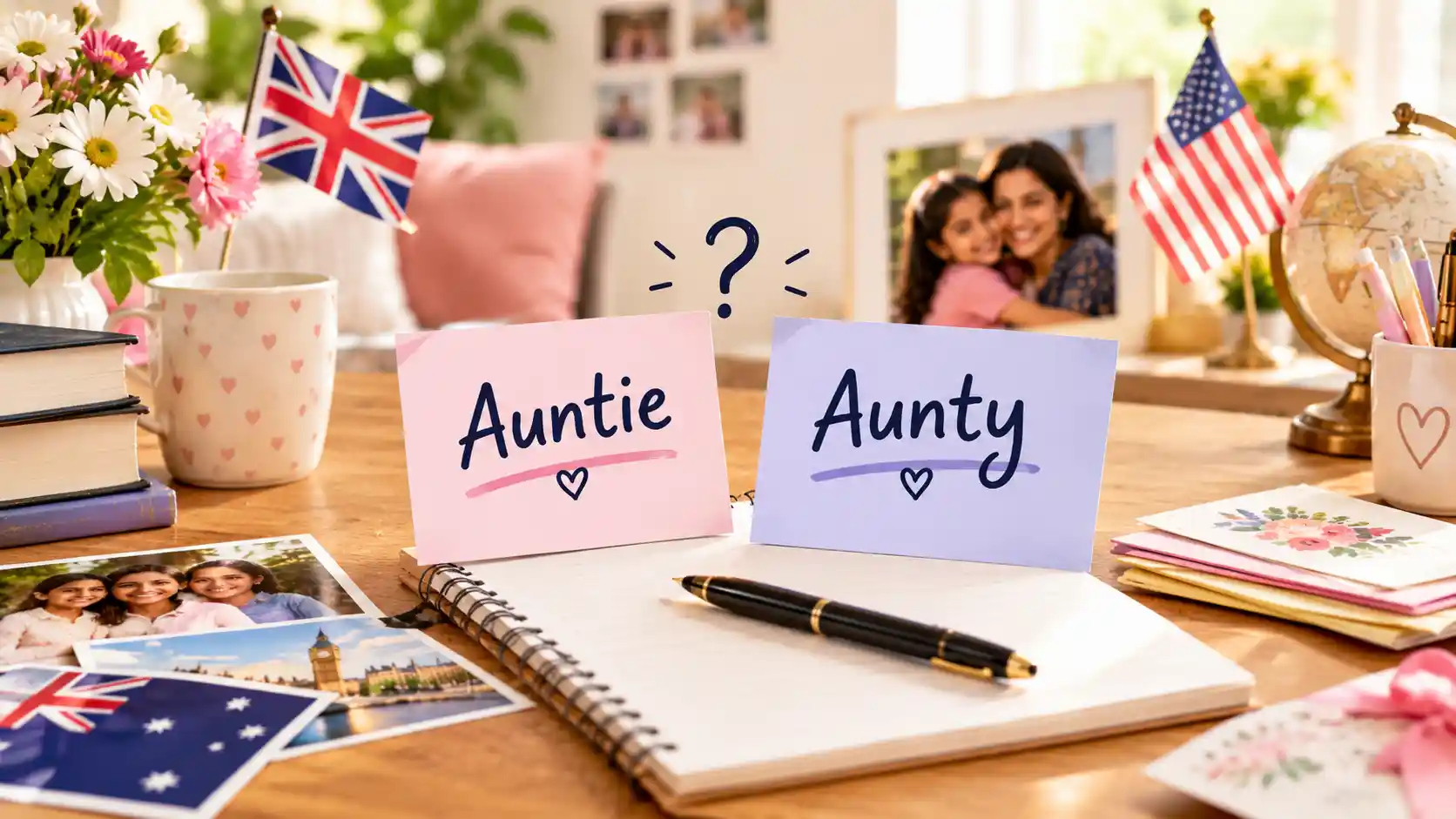
You’re writing a birthday card, a text message, or a caption for a family photo, and you pause before typing “auntie” or “aunty.” Both look familiar. Both feel right. So which one is actually correct?
This is a common spelling question because the word is informal by nature, it’s not a strict grammar rule, but a casual, affectionate term used across generations and cultures. People search for this while writing greeting cards, social media captions, children’s books, or even formal family announcements like wedding invitations or baby shower thank-you notes.
The confusion exists because both spellings are genuinely correct and widely used, just in slightly different regions and contexts. Unlike many spelling debates where one version is simply wrong, this one comes down to preference, tradition, and geography.
This article gives you a clear answer, explains where each spelling comes from, and shows you exactly which version fits your audience best. By the end, you’ll know exactly which one to use, and why both are perfectly acceptable.
Auntie or Aunty Quick Answer
Both “auntie” and “aunty” are correct spellings. Neither is wrong, and the choice mostly depends on regional preference and personal or family tradition.
Examples:
- “My auntie always makes the best banana bread.” (common in the US)
- “We’re visiting Aunty Priya this weekend.” (common in the UK, Australia, and South Asia)
Major dictionaries list both spellings as acceptable informal variants of “aunt.”
The Origin of Auntie and Aunty

The word “aunt” comes from Old French ante, which traces back to Latin amita, meaning “father’s sister.” English adopted “aunt” by the 13th century as the formal term for a parent’s sister or a parent’s sibling’s spouse.
The informal, affectionate versions, “auntie” and “aunty,” developed later, following a common pattern in English where adding “-ie” or “-y” to a noun creates a warmer, more casual or childlike form, similar to “daddy” from “dad” or “mommy” from “mom.” Both spelling endings, “-ie” and “-y,” have existed side by side in English for centuries, without one being officially declared more correct than the other.
Over time, regional writing habits shaped which spelling became more common. In American English, “-ie” endings (like “auntie,” “movie,” “cookie”) became slightly more standard. In British and Commonwealth English, “-y” endings (like “aunty,” alongside “granny” and “hanky”) gained wider use, especially influenced by usage patterns in Australia, India, and other former British colonies.
British English vs American English Spelling
Both spellings appear in American and British English, but usage patterns differ by region.
| Style | American English | British English/Commonwealth |
| More common spelling | auntie | aunty |
| Alternative spelling | aunty (less common) | auntie (also used) |
| Dictionary status | Merriam-Webster: auntie (primary) | Oxford: aunty and auntie (both listed) |
| Common in casual writing | auntie | aunty |
| Regional strength | United States, Canada | UK, Australia, India, South Africa |
Neither spelling is considered incorrect in either dialect. The difference reflects a general regional tendency rather than a strict rule, and both forms appear frequently in casual writing worldwide.
Which Spelling Should You Use?
- US writers: “Auntie” is the more commonly used and recognized spelling in American English.
- UK and Commonwealth writers (UK, Australia, India, South Africa): “Aunty” is widely used and often preferred, especially in casual, everyday, and family contexts.
- Global and general writers: Either spelling works well. If you’re writing for a specific regional audience, match their common usage; otherwise, choose whichever spelling feels most natural and stay consistent.
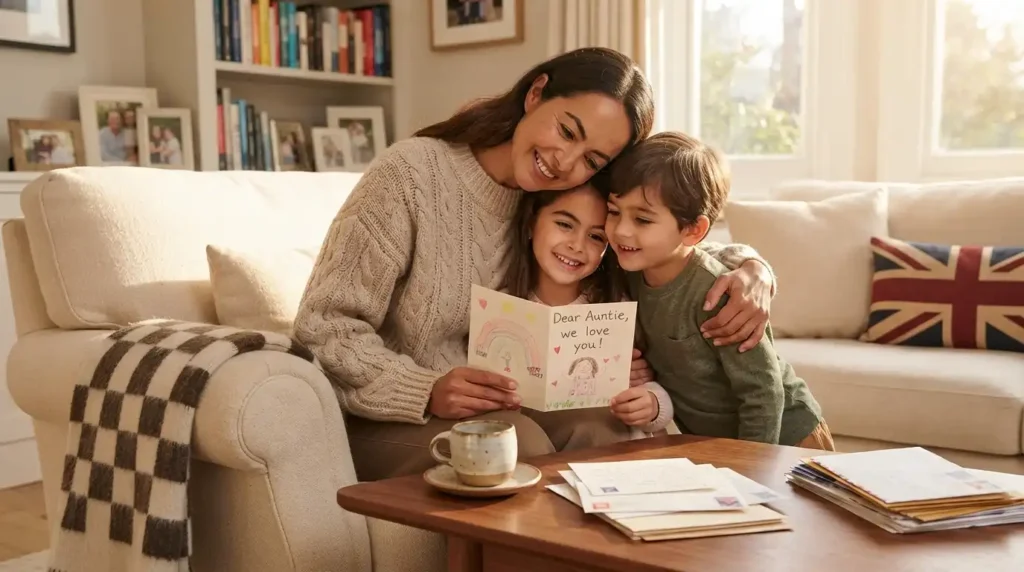
If you’re writing a personalized item, like a card or gift, consider matching the spelling your family or the recipient typically uses, since this word often carries personal or cultural significance.
Common Mistakes with Auntie and Aunty
- Switching spellings within the same piece of writing : Using “auntie” in one sentence and “aunty” in another looks inconsistent, especially in personalized cards or captions.
- Assuming one spelling is universally correct : Both are accepted; neither is a typo or an error.
- Capitalizing inconsistently : Both words should be capitalized when used as a title before a name (e.g., “Auntie Sarah” or “Aunty Priya”), but lowercase when used generally (e.g., “my auntie” or “my aunty”).
- Confusing “auntie/aunty” with formal “aunt” : In formal writing, such as legal documents or official biographies, “aunt” is the standard term; “auntie” and “aunty” are informal and better suited for casual contexts.
- Overlooking cultural or family preference : In many South Asian, Caribbean, and African communities, “aunty” carries specific cultural and social meaning beyond just family relation, sometimes used respectfully for older women in general, so context matters.
Auntie/Aunty in Everyday Examples

In emails: “Just a reminder that Auntie Linda’s birthday dinner is this Saturday at 6 PM.”
In news: “The beloved ‘Aunty’ next door has become a local hero for organizing neighborhood cleanups for over a decade.”
On social media: “Best day ever with my favorite aunty! Love you so much.”
In formal writing: “The children referred to their aunt affectionately as ‘Auntie’ throughout the memoir, reflecting the close bond within the family.”
Auntie or Aunty Google Trends & Usage Data
Search and usage data show “auntie” leading in the United States and Canada, while “aunty” dominates in the United Kingdom, Australia, India, and other Commonwealth countries. This pattern holds consistently across social media, product listings (like personalized gifts), and everyday informal writing.
Interest in both spellings tends to rise around Mother’s Day, family celebrations, and holiday seasons, when people frequently search for the correct spelling while writing cards, captions, or gift messages. In South Asian and Caribbean online communities specifically, “aunty” also carries broader cultural usage, often referring affectionately to any older woman in the community, not just a direct family member, which contributes to its especially high usage in those regions.
Keyword Variation Comparison Table
| Variation | Common Use | Region |
| Auntie | Standard informal spelling | US, Canada |
| Aunty | Standard informal spelling | UK, Australia, India, South Africa |
| Aunt | Formal term | Global |
| Auntie/Aunty (cultural use) | Respectful term for older women | South Asia, Caribbean, Africa |
FAQs
1. Is it “auntie” or “aunty”?
Both are correct. “Auntie” is more common in American English, while “aunty” is more common in British and Commonwealth English.
2. Is one spelling more correct than the other?
No, both are accepted informal spellings of “aunt” in major dictionaries.
3. Which spelling should I use for a birthday card?
Either works well. Consider using whichever spelling matches your family’s tradition or the recipient’s regional background.
4. Should “auntie” or “aunty” be capitalized?
Yes, when used as a title before a name (like “Auntie Rose”), but lowercase when used generally (like “my aunty”).
5. Is “aunty” used for people who aren’t actually family?
Yes, especially in South Asian, Caribbean, and African cultures, “aunty” is often used respectfully to address older women in the community, regardless of blood relation.
6. What’s the formal version of this word?
“Aunt” is the standard, formal term used in official or legal writing. “Auntie” and “aunty” are informal, affectionate variants.
7. Does spelling affect meaning?
No, both “auntie” and “aunty” mean the same thing. The difference is purely regional and stylistic, not a difference in meaning.
Conclusion
Both “auntie” and “aunty” are correct spellings, and neither is more accurate than the other, this is a case of regional preference rather than a strict grammar rule. “Auntie” tends to be more common in American English, while “aunty” is more widely used in British, Australian, Indian, and other Commonwealth English varieties.
The word itself developed as an affectionate, informal version of “aunt,” following a common English pattern of adding “-ie” or “-y” to create warmer, more casual terms. Both spellings have coexisted for generations, shaped by regional writing habits rather than any official rule.
Whether you’re writing a card, a caption, or a casual message, choose the spelling that feels most natural to you or matches your audience’s regional preference, and stay consistent throughout your writing. Either way, you’ll be spelling it correctly.

Haleema Sadia is a passionate content writer specializing in wishes, greetings, messages, and heartfelt quotes. With 3 years of experience, she creates warm, engaging, and SEO-friendly content that helps readers find the perfect words to celebrate special moments and express their feelings.