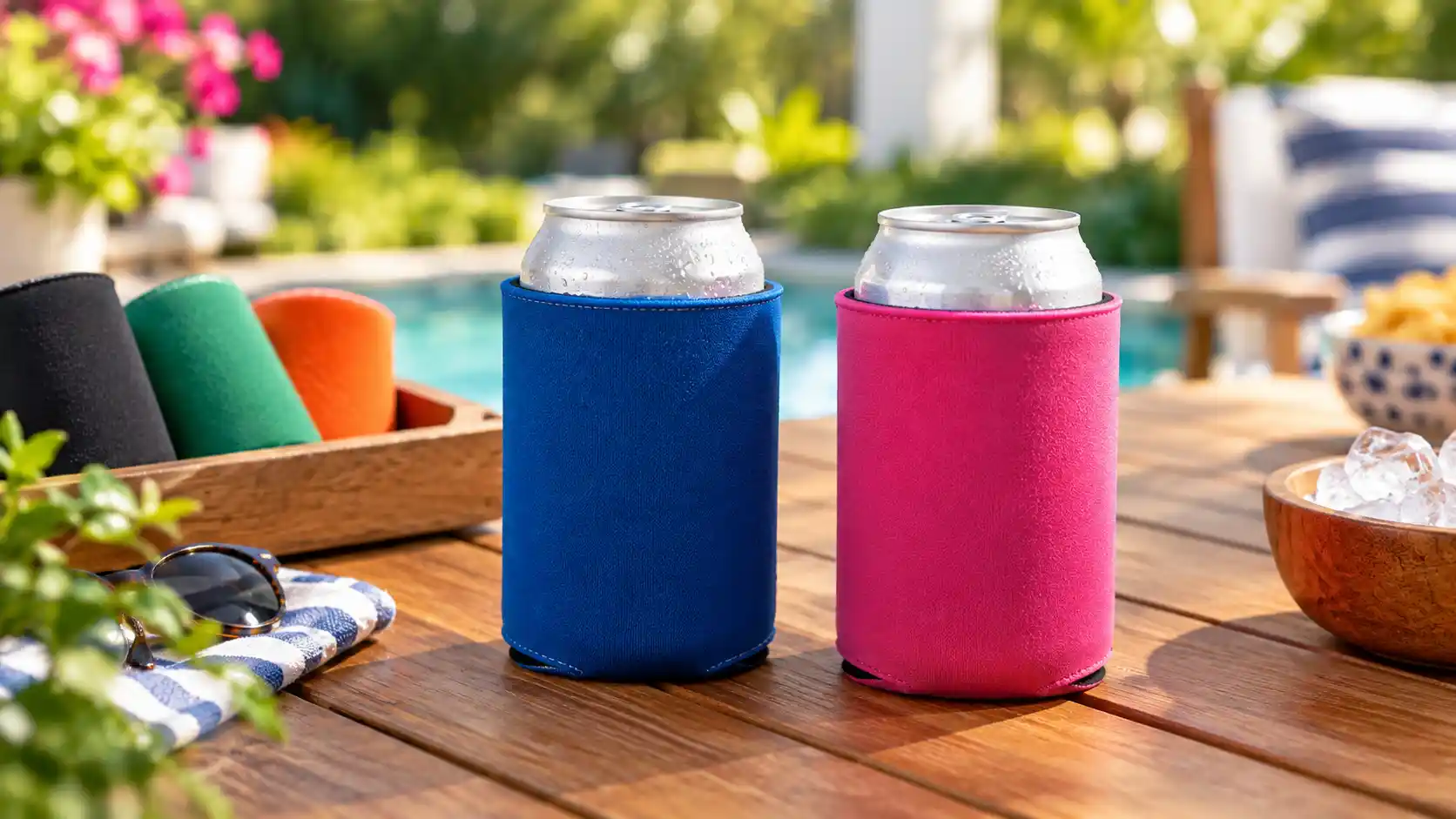
You grab a can of soda on a hot day, slide it into that foam sleeve to keep it cold, and go to text a friend about it. You type “koozie.” Then you pause. Then you pause and ask yourself: Could “coozie” be the correct spelling after all? Autocorrect doesn’t flag either one, and both spellings show up on store shelves and websites.
This is one of those everyday words that never made it into strict dictionary rules, so people search for the correct spelling constantly. It comes up when writing product listings, ordering custom drink sleeves for a wedding or party, or just settling an argument with a friend.
The confusion exists because the word started as a brand name, not a formal English word. Brand names that become everyday terms often end up with multiple spellings, since there’s no single official source everyone follows.
This article gives you the quick answer, explains where the word came from, and shows you exactly which spelling to use depending on your audience. By the end, you’ll know exactly which one to type without a second thought.
Koozie or Coozie Quick Answer
“Koozie” is the more common and widely recognized spelling.
Examples:
- “I keep a koozie in my car for road trips.”
- “We ordered custom koozies for the wedding.”
“Coozie” is a valid alternate spelling, especially in casual or regional speech, but “koozie” appears far more often in stores, product names, and online content.
The Origin of Koozie

“Koozie” started as a trademarked brand name. The Koozie Group, formerly known as Norwood Promotional Products, registered “KOOZIE” as a trademark in the United States in the 1980s for their foam can insulators.
Over time, like “Kleenex” for tissues or “Band-Aid” for adhesive bandages, the brand name became a generic term for any drink insulator sleeve, regardless of who made it. This process is known as genericization, where a trademarked brand name gradually becomes part of everyday language and is widely used to describe an entire category of products.
Since “koozie” began as a brand-derived term rather than an established English word, dictionaries never imposed a single standard spelling on it as they traditionally do with older vocabulary.
As people heard the word spoken and typed it out, some wrote “koozie,” others wrote “coozie,” and a few used “cozy” or “cosy,” blending it with the older, unrelated word meaning “warm and comfortable.” This created the spelling variation we see today.
British English vs American English Spelling
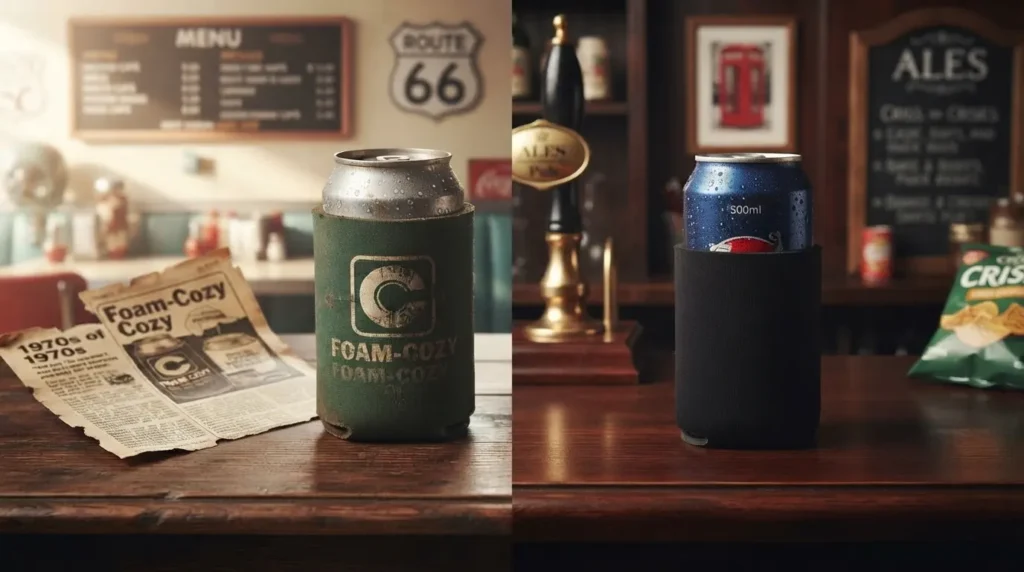
Unlike true British-versus-American spelling pairs (like “color” and “colour”), “koozie” doesn’t have an official regional split. This is largely an American term, and the UK often uses different words entirely.
| Term | American English | British English |
| Most common name | koozie | stubby holder (informal, more common in Australia), can cooler |
| Alternate spelling | coozie | rarely used |
| Formal/generic term | can insulator, drink sleeve | can holder, drinks cooler |
| Regional slang | koozie (US-wide) | stubby holder (Australia/NZ) |
If your audience is in the UK or Australia, “koozie” may be unfamiliar, so a more regionally recognized term can make your writing clearer and easier to understand. Consider using “can cooler” or “stubby holder” instead, depending on the region.
Which Spelling Should You Use?
- US writers: Use “koozie.” It’s the standard spelling used by manufacturers, retailers, and most consumers.
- UK and Commonwealth writers: For a general audience, consider using “can cooler” in the UK or “stubby holder” in Australia and New Zealand, as “koozie” may be less familiar in these regions.
- Global and e-commerce writers: Use “koozie” as your primary keyword for US-based shoppers, but include “can cooler” or “drink insulator” as alternate terms to reach international buyers.
If you specifically need the alternate spelling for search purposes, include “coozie” as a secondary term, since some shoppers do search using that spelling.
Common Mistakes with “Koozie”

- Confusing it with “cozy” or “cosy” : These are unrelated older English words meaning warm and comfortable, not the drink sleeve.
- Assuming everyone recognizes the term: “Koozie” is primarily used in the United States and may be unfamiliar to many international readers, particularly those in the UK.
- Inconsistent spelling across a website or listing : Switching between “koozie” and “coozie” on the same product page can hurt SEO and confuse shoppers.
- Capitalizing it like a brand name : Since it’s now a generic term, it doesn’t need to be capitalized as “Koozie,” unless referring to the original trademark specifically.
- Ignoring regional alternatives in marketing copy : Missing “can cooler” or “stubby holder” in listings can mean missing international search traffic.
Koozie in Everyday Examples
In emails: “I’ve attached the design proof for the custom koozies we’re planning to use at the company event.”
In news: “A local brewery has introduced limited-edition koozies to mark its 10th anniversary.”
On social media: “Looking for a fun wedding favor? Personalized koozies are a cute, practical choice for every guest!”
In formal writing: “The promotional products industry has seen steady demand for branded can insulators, commonly known as koozies, as low-cost marketing tools.”
Koozie or Coozie Google Trends & Usage Data
Search trends show that “koozie” is significantly more popular than “coozie” in the United States, where the term is most widely recognized and commonly searched.
Interest spikes during summer months, around holidays like the Fourth of July, and ahead of wedding season, when custom koozies are popular as party favors or event merchandise.
Outside the US, search volume for “koozie” drops significantly. In Australia, “stubby holder” is the dominant search term. In the UK, “can cooler” sees more consistent use. This makes “koozie” a largely American keyword, useful mainly for US-targeted content and products.
Keyword Variation Comparison Table
| Variation | Common Use | Region |
| Koozie | Most common, standard spelling | United States |
| Coozie | Alternate spelling, less common | United States (casual) |
| Can cooler | Formal/generic alternative | UK, global |
| Stubby holder | Regional slang term | Australia, New Zealand |
| Drink insulator | Formal/product description term | Global, e-commerce |
FAQs
1. Is it spelled “koozie” or “coozie”?
“Koozie” is the more common and widely recognized spelling, though “coozie” is used as an informal alternative.
2. Is “koozie” a real word in the dictionary?
Some dictionaries now include “koozie” as an informal or trademark-derived term, though it started as a brand name, not a standard English word.
3. What is a koozie used for?
A koozie is a foam or fabric sleeve used to insulate a canned or bottled drink, keeping it cold longer and preventing condensation on your hand.
4. Do British people use the word “koozie”?
Not commonly. British English speakers are more likely to say “can cooler,” while Australians often say “stubby holder.”
5. Why are there two spellings for the same word?
Since “koozie” began as a brand name rather than an established English word, its spelling was never formally standardized. As the term spread through everyday speech and writing, alternative forms such as “coozie” naturally emerged.
6. Should I use “koozie” or “coozie” for SEO purposes?
Use “koozie” as your primary keyword, since it has significantly higher search volume, but you can include “coozie” as a secondary term to capture additional searches.
7. Is “koozie” capitalized?
No, not anymore. Since it has become a generic term for the product category, it’s typically written in lowercase, unless referring to the specific original brand.
Conclusion
“Koozie” is the standard, most widely used spelling for the foam sleeve that keeps your drink cold, while “coozie” remains a valid but less common alternative. The word began as a trademarked brand name in the 1980s before gradually becoming a widely used generic term, much like “Kleenex” and “Band-Aid.” Because it evolved from a brand into everyday language, its spelling developed through common usage rather than being firmly standardized.
For most writing, especially in the United States, “koozie” is the safest and most recognized choice. If you’re writing for UK or Australian audiences, consider using “can cooler” or “stubby holder” instead, since “koozie” may not be familiar to those readers.
If you’re writing a product listing, planning a wedding favor order, or just settling a spelling debate, stick with “koozie” for clarity and consistency, and keep “coozie” in mind only as a secondary, informal option.

Zainab Noor is a passionate content writer specializing in grammar and English language topics. With 2 years of experience, she creates clear, engaging, and SEO-friendly content that helps readers understand grammar, improve their writing skills, and use English with greater confidence.