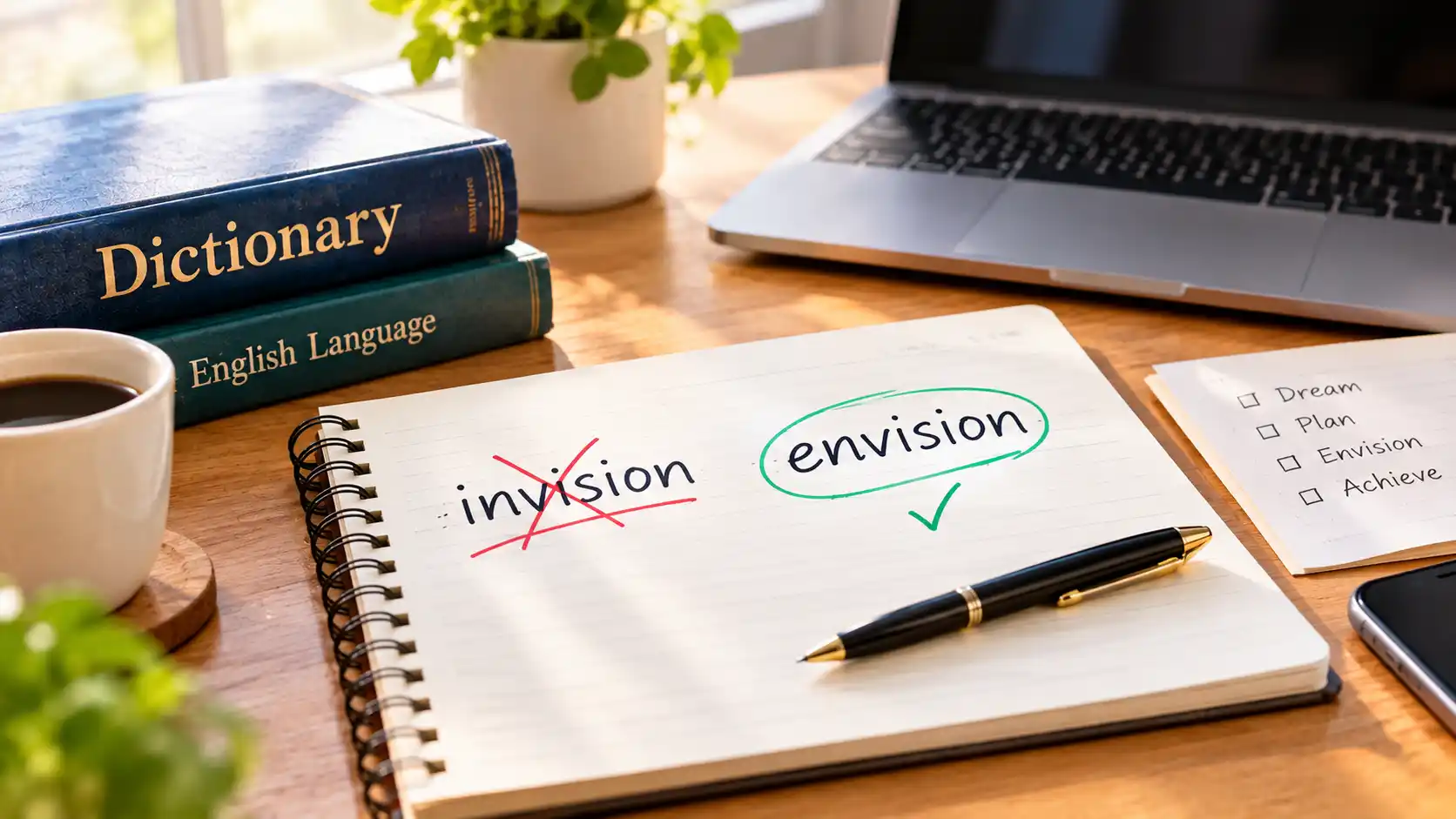
You’re writing a sentence about imagining the future, and you type “invision.” Your spellchecker flags it, so you try “envision” instead. That version looks right but why does “invision” seem so believable if it’s incorrect?
This is a common spelling confusion, especially when people are writing essays, business plans, motivational posts, or emails about future goals. The mix-up is understandable because “in-” and “en-” are both common English prefixes. Many familiar words begin with “in-,” so “in vision” can easily look like a legitimate word at first glance.
There is another reason for the confusion. In Vision is also the name of a design and collaboration software brand. As a result, people may encounter the spelling online and assume it is simply another form of the English verb.
In this article, you’ll learn which spelling is correct, why “invision” is commonly mistaken for “envision,” and how to use the right word confidently in your writing.
Invision or Envision Quick Answer
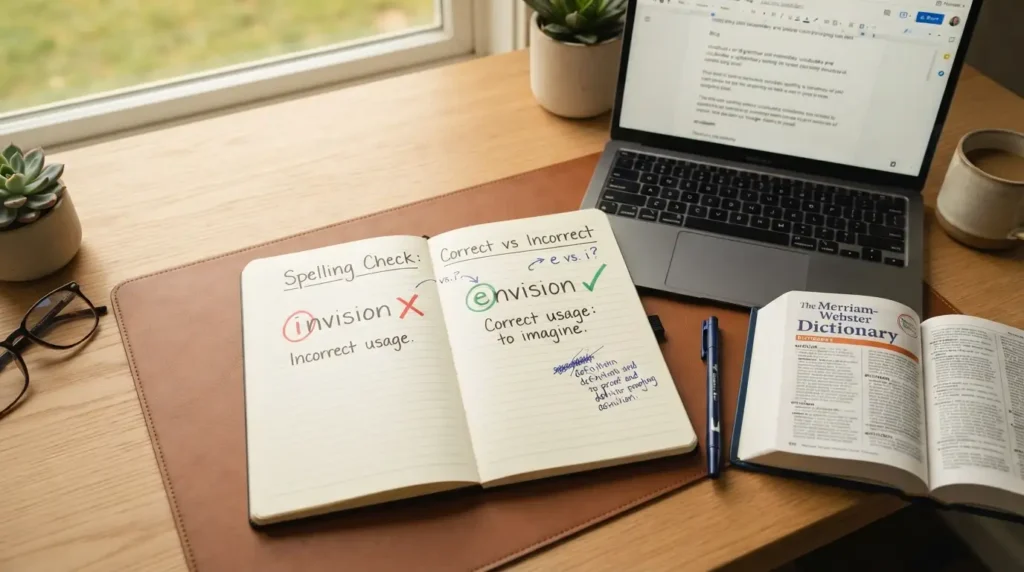
“Envision” is the correct English word. “Invision” is not a standard word.
Examples:
- “She envisions a future where clean energy powers every city.” (correct)
- “He tried to envision the final product.” (incorrect; should be “envision”)
The only correct use of “invision” is as part of the proper noun InVision, the name of a digital design and prototyping software company. Outside of that brand name, “invision” is simply a misspelling of “envision.”
The Origin of Envision
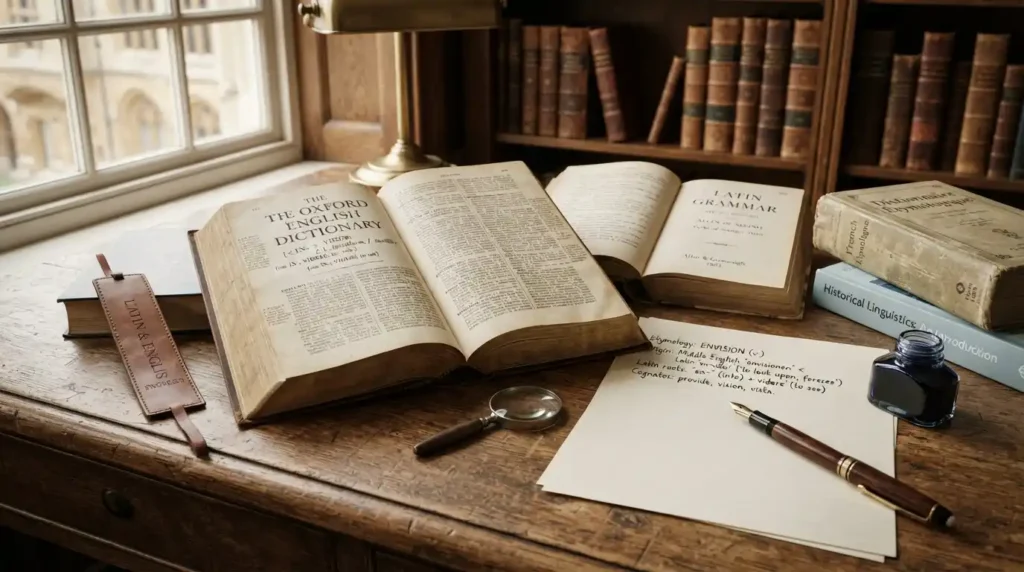
“Envision” comes from the prefix “en-,” meaning “to put into” or “to make,” combined with “vision,” from Latin visio, meaning “sight” or “seeing.” Together, “envision” literally means “to put into sight” or “to picture something in your mind.”
The word entered English usage in the mid-20th century, growing especially popular in business, motivational, and leadership writing, where people describe imagining future goals or outcomes.
The confusion with “in vision” likely comes from the prefix “in-,” which is extremely common in English and often means “into” or “not,” depending on the word (like “inspire,” “insert,” or “invisible”). Because “in-” appears so often, some writers assume it applies here too. But “envision” has always used the “en-” prefix, not “in-,” and no historical or standard dictionary form of “in vision” as a verb has ever existed. The only reason “in vision” appears widely online today is because of the software company In Vision, founded in 2011, which capitalized on the near-identical sound to the real word.
British English vs American English Spelling
There is no regional spelling difference here. “Envision” is the correct and only standard form in both American and British English.
| Term | American English | British English |
| Correct word | envision | envision (also “envisage” is common) |
| Incorrect spelling | in vision | invision |
| Related word | envisage (more common in UK) | envisage |
| Brand name (proper noun) | InVision (software) | InVision (software) |
One useful note: British English speakers often prefer the word “envisage” over “envision” in formal writing, though both are correct and understood in both regions. “Invision,” however, is never correct as a regular word in either dialect.
Which Spelling Should You Use?US writers: Use “envision” when you mean to imagine or picture a future possibility. It is the standard spelling in American English.
UK and Commonwealth writers: “Envision” and “envisage” are both correct. “Envisage” is often preferred in more formal British English.
Global and academic writers: “Envision” is a clear, widely recognized choice. Avoid “invision” unless you are referring specifically to the InVision software brand.
Regardless of your audience, use “envision” when you mean “to imagine” or “to picture.” Reserve “InVision” for the proper name of the software company.
Common Mistakes with “Envision”
- Writing “invision” instead of “envision” : This is the most common error, usually caused by confusing prefixes or autocorrect suggestions on mobile keyboards.
- Confusing the brand name with the verb : Writing “I want to envision my goals,” mistakenly borrowing the spelling from the InVision software brand.
- Overcapitalizing “envision” : Capitalizing the word in regular sentences as if it were a proper noun, when it should stay lowercase unless it starts a sentence.
- Mixing up “envision” and “envisage” incorrectly : Both are correct, but “envisage” can sound overly formal in casual American writing.
- Assuming spellcheck will always catch it : Some autocorrect tools or predictive keyboards mistakenly suggest “invision” due to its similarity to the brand name, so manual proofreading still matters.
Envision in Everyday Examples
In emails: “I envision this partnership growing significantly over the next two years.”
In news: “City planners envision a fully pedestrian downtown area by the end of the decade.”
From social media: “Take a moment today to envision where you want to be in five years. #goals”
In formal writing: “The strategic plan envisions a 30% increase in operational efficiency through targeted automation initiatives.”
Invision or Envision Google Trends & Usage Data
Search data shows a high volume of searches for “invision” specifically because of the InVision software brand, which is widely used by designers, product teams, and developers worldwide. This creates unusually high search interest in a term that isn’t a standard English word outside that brand context.
Meanwhile, “envision” sees consistent, steady search volume tied to personal development, business planning, and motivational content, especially in the United States, United Kingdom, and India. Interest in “envision” often spikes around New Year’s resolutions and goal-setting seasons, while “invision” search spikes tend to follow software updates or design industry news.
Keyword Variation Comparison Table
| Variation | Common Use | Context |
| Envision | Correct verb, standard usage | General English, global |
| Envisage | Correct verb, more formal | UK, academic/business writing |
| InVision | Proper noun, brand name | Design software industry |
| Invision (lowercase, as a verb) | Incorrect spelling | Common typo |
FAQs
1. Is “invision” a real word?
No, not as a regular verb. The only correct use is as part of the proper noun “InVision,” a design software company.
2. What is the correct word for imagining the future?
“Envision” is the correct word for imagining or picturing something in your mind.
3. Why do people confuse “envision” and “envision”?
The mix-up happens because “in-” is a common English prefix, and the InVision software brand name adds extra confusion online.
4. Is “envisage” the same as “envision”?
Yes, they mean essentially the same thing. “Envisage” is more common in British English and tends to sound slightly more formal.
5. Can I ever use “invision” as a regular word?
No, except when specifically referring to the InVision software company by name.
6. Does autocorrect fix this mistake automatically?
Not always. Some predictive keyboards may even suggest “invision” due to the popularity of the brand name, so manual checking is still important.
7. Which is correct in a resume or cover letter: “envision” or “invision”?
Always use “envision.” “Invision” would be considered a spelling error in professional documents.
Conclusion
“Envision” is the correct English word for imagining or picturing something in your mind, while “invision” is not a standard word at all, except as the name of a design software company. This mix-up happens easily because of the common “in-” prefix and the added confusion from the InVision brand name circulating online.
Unlike true spelling variations between American and British English, this isn’t a regional difference. Both dialects agree: “envision” is correct, with “envisage” as an accepted, slightly more formal alternative, especially in the UK.
For resumes, business writing, essays, or everyday communication, always use “envision.” Reserve “InVision” only for references to the specific software brand. Keeping this distinction clear will help your writing look accurate and professional every time.

Haleema Sadia is a passionate content writer specializing in wishes, greetings, messages, and heartfelt quotes. With 3 years of experience, she creates warm, engaging, and SEO-friendly content that helps readers find the perfect words to celebrate special moments and express their feelings.