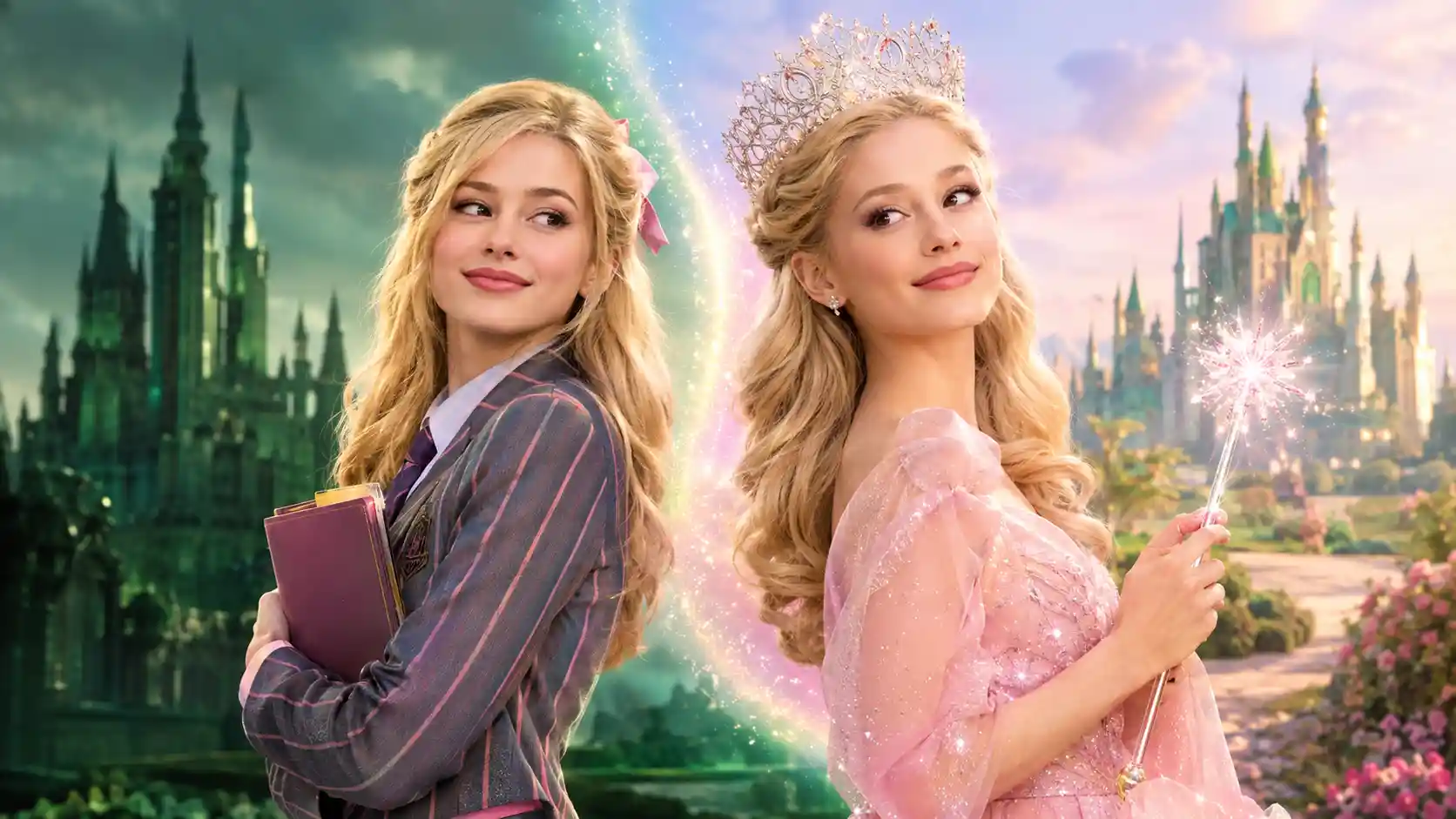
You may have seen both Galinda and Glinda while reading about Wicked or The Wizard of Oz. At first glance, the two names look like a simple spelling mistake. However, there is an important difference. They are two forms used for the same fictional character at different points in the Wicked story.
In L. Frank Baum’s original The Wonderful Wizard of Oz, the character is known as Glinda. Later, Gregory Maguire’s 1995 novel Wicked introduces her as Galinda, and the character later changes the spelling to Glinda. The stage musical follows this name change as well.
This explains why readers, movie viewers, students, and fans often search for galinda or glinda. They may see one name in one source and the other in another. So, which one should you use? The answer depends on the story, time, and context. This guide explains the difference, history, common mistakes, usage examples, and practical writing advice.
Galinda or Glinda Quick Answer

Galinda and Glinda are both correct, but they are not simply two alternative spellings of an ordinary English word.
In Wicked, Galinda is the character’s earlier name. Later, she changes it to Glinda. The stage musical also presents this name change.
In the original Oz story, however, the familiar name is Glinda. She is the famous good witch created by L. Frank Baum.
| Name | Main use | Example |
| Galinda | Earlier name in Wicked | “Galinda attends Shiz University.” |
| Glinda | Later name and classic Oz name | “Glinda is known as the Good Witch.” |
| Galinda → Glinda | Name-change context | “Galinda later becomes Glinda.” |
So, if you are discussing her early life in Wicked, use Galinda. If you are discussing the familiar Good Witch of Oz, Glinda is usually the right choice.
The Origin of Galinda or Glinda

The two forms have different literary histories.
Glinda is the original name associated with the Good Witch in L. Frank Baum’s The Wonderful Wizard of Oz, published in 1900. The character later became widely known through different Oz adaptations.
The spelling Galinda became especially important through Gregory Maguire’s 1995 novel Wicked: The Life and Times of the Wicked Witch of the West. In that story, the character begins as Galinda and later drops the first “a.”
The stage musical Wicked uses the same basic idea. Galinda is the name used earlier in the story. Later, she changes her name to Glinda in honor of Dr. Dillamond, who had called her “Glinda.”
Therefore, this is not a British-versus-American spelling difference.
It is a story and character-name difference.
That point matters because some readers assume that Galinda is an incorrect version of Glinda. In Wicked, it is not. The spelling change is part of the character’s story.
Why Does Galinda Become Glinda?
The change happens within the story.
In the musical, Galinda changes her name to Glinda after Dr. Dillamond’s dismissal and in connection with the way he had pronounced her name.
A simple way to remember it is:
Galinda → removes the “a” → Glinda
So, when you see Galinda, think of the earlier version of the character. When you see Glinda, think of the later identity or the classic Oz character.
British English vs American English Spelling
Unlike words such as colour/color or centre/center, Galinda and Glinda are not British and American spelling variants.
Both American and British English readers can encounter both names.
The difference comes from the fictional source and the point in the character’s story.
| Feature | Galinda | Glinda |
| Type | Fictional proper name | Fictional proper name |
| Main association | Wicked | The Wizard of Oz and later Wicked |
| Story position | Earlier name | Later/familiar name |
| British spelling | Galinda | Glinda |
| American spelling | Galinda | Glinda |
| Capitalization | Always capitalized | Always capitalized |
| Different person? | No | No |
For example, a British writer could say:
“Galinda studies at Shiz University before becoming Glinda.”
An American writer could use exactly the same sentence.
Therefore, do not change Galinda to Glinda simply because you are writing for a British audience. The choice depends on what part of the story you mean.
Which Spelling Should You Use?
The best spelling depends on your audience and your context.
For general Oz writing
Use Glinda.
If your article is about the classic Good Witch, most readers will recognize Glinda immediately.
For Wicked discussions
Use Galinda when discussing her earlier identity.
For example:
“Galinda meets Elphaba at Shiz University.”
Use Glinda when discussing the later character.
“Glinda becomes known as the Good Witch.”
For literary analysis
You may need both names.
For example:
“The change from Galinda to Glinda is part of the character’s development.”
This is especially useful when discussing Wicked as a novel, musical, or character study.
For global readers
If your audience may not know the story well, explain the difference once.
A clear sentence is:
“Galinda is her earlier name in Wicked, while Glinda is the name she later adopts.”
After that, you can use the form that fits your discussion.
Common Mistakes with Galinda or Glinda
Because the names are so similar, several mistakes are common.
Mistake 1: Calling Galinda a spelling error
Incorrect:
“Galinda is the misspelled version of Glinda.”
Better:
“Galinda is the character’s earlier name in Wicked.”
The two forms have a story-based purpose.
Mistake 2: Treating them as two characters
Incorrect:
“Galinda and Glinda are two different witches.”
Better:
“Galinda and Glinda refer to the same character at different stages of the story.”
Mistake 3: Using Galinda for the classic Oz character
If you are talking specifically about Baum’s original Good Witch, Glinda is the established name.
Mistake 4: Writing “glinda” in lowercase
Both names are proper names.
Correct:
“Glinda helps Dorothy.”
Not:
“glinda helps Dorothy.”
Mistake 5: Using “Glenda” when you mean Glinda
Glenda is another name, but it is not the standard name of the Oz character.
For the character, use Glinda or, in the appropriate Wicked context, Galinda.
Galinda or Glinda in Everyday Examples
Understanding the context makes the choice easy.
In an email
“I am writing a short report about Galinda and Glinda in Wicked.”
This is useful when the email discusses the name change.
In a news article
“Glinda has become one of the most recognizable characters associated with Wicked.”
Here, the later and widely recognized name works naturally.
On social media
“I loved Glinda’s look in Wicked!”
This is a normal general reference to the character.
In formal writing
“In Wicked, Galinda later adopts the name Glinda.”
This is especially clear because it identifies both forms.
In literary analysis
“The transition from Galinda to Glinda reflects an important change in the character’s identity.”
This wording makes the relationship between the two names clear.
In a fan discussion
“Do you prefer Galinda’s early characterization or Glinda’s later identity?”
Both forms are appropriate because the discussion focuses on different stages.
Galinda or Glinda Google Trends & Usage Data

Search interest in these names is strongly connected to Wicked, The Wizard of Oz, film releases, theatre, costumes, and popular culture.
It is important, however, not to treat the two names as ordinary spelling variants with identical search intent. Glinda has a much broader cultural connection because it is the established Oz name, while Galinda is more closely tied to Wicked and the character’s earlier identity.
Recent Google-related search reporting also shows strong interest in Glinda around Wicked. In Google’s Canada Halloween 2025 search report, searches for Glinda costumes were reported as roughly twice those for Elphaba costumes.
Google Trends reporting around the 2025 awards season also showed substantial interest in Wicked, with searches concentrated particularly in the United States and United Kingdom and notable interest in Australia, Singapore, and Canada.
The exact popularity of Galinda versus Glinda can change by date, country, and search category. Google Trends uses relative search interest rather than a simple worldwide count, so a comparison should always specify the time period and location.
For SEO, this means that Glinda can reach a broader audience, while Galinda or Glinda directly addresses users who are trying to understand the name difference.
Galinda vs Glinda: Comparison Table
| Point | Galinda | Glinda |
| Same character? | Yes | Yes |
| Earlier Wicked name? | Yes | No |
| Later Wicked name? | No | Yes |
| Classic Oz name? | No | Yes |
| Proper noun? | Yes | Yes |
| Capitalized? | Yes | Yes |
| British spelling? | Not specifically | Not specifically |
| American spelling? | Not specifically | Not specifically |
| Best for early Wicked scenes | Yes | No |
| Best for general Oz references | No | Yes |
| Best for explaining the name change | Yes | Yes |
FAQs
1. Are Galinda and Glinda the same person?
Yes. In the Wicked story, Galinda and Glinda refer to the same character. Galinda is used earlier, and she later becomes Glinda.
2. Is Galinda the correct spelling?
Yes, when you are referring to the character’s earlier name in Wicked. It is not simply a spelling mistake.
3. Is Glinda the original name?
Yes. Glinda is the established name of the Good Witch in L. Frank Baum’s Oz stories.
4. Why does Galinda change her name to Glinda?
In Wicked, she changes the spelling by dropping the first “a.” The musical connects the change with Dr. Dillamond and the way he had called her Glinda.
5. Which spelling should I use for the Good Witch?
Use Glinda. It is the familiar name associated with the Good Witch of Oz.
6. Is Galinda a British spelling of Glinda?
No. The difference is not related to British or American English. Both forms are used according to the fictional story and character context.
7. Should I write “Galinda or Glinda” in an article title?
Yes. If your goal is to answer the common name-confusion question, Galinda or Glinda is a clear and useful title because it matches the issue readers are trying to solve.
Conclusion
The difference between Galinda and Glinda is not a simple spelling rule. These names belong to the same fictional character, but they are used at different points in the Wicked story. Galinda is the earlier name, while Glinda is the later name and the familiar name of the Good Witch associated with the Oz stories.
If you are writing about the classic Wizard of Oz character, Glinda is the clear choice. If you are discussing the beginning of Wicked, especially her time at Shiz University, Galinda is more precise. When discussing the name change itself, using both forms is best.
Most importantly, do not treat Galinda as a spelling error. The difference has a purpose within Wicked. For clear professional writing, introduce the relationship once, such as “Galinda, later known as Glinda.” After that, choose the name that matches the part of the story you are describing. This approach keeps your writing accurate, simple, and easy for readers to understand.

Zainab Noor is a passionate content writer specializing in grammar and English language topics. With 2 years of experience, she creates clear, engaging, and SEO-friendly content that helps readers understand grammar, improve their writing skills, and use English with greater confidence.