Halloween is close, and you just typed “trunk or treat themes” into Google. Maybe your school emailed asking for a decorated car. Maybe your church is planning its yearly event and needs fresh ideas. Or maybe you saw a friend’s minivan turned into a pirate ship and thought, “I need to do that too.”
People search for this keyword for one simple reason: they want their trunk to stand out, but they don’t want to spend hours guessing what works. There’s also quiet confusion buried in the phrase itself. Is it “trunk or treat” or “trunk-or-treat”? Is this an American thing, or does the rest of the world do it too? Why does everyone seem to know the rules except you?
This guide fixes that. You’ll get quick theme ideas, the real history behind the tradition, spelling and regional differences explained in plain terms, and answers to the questions people actually ask before they start decorating.
Trunk or Treat Themes Quick Answer
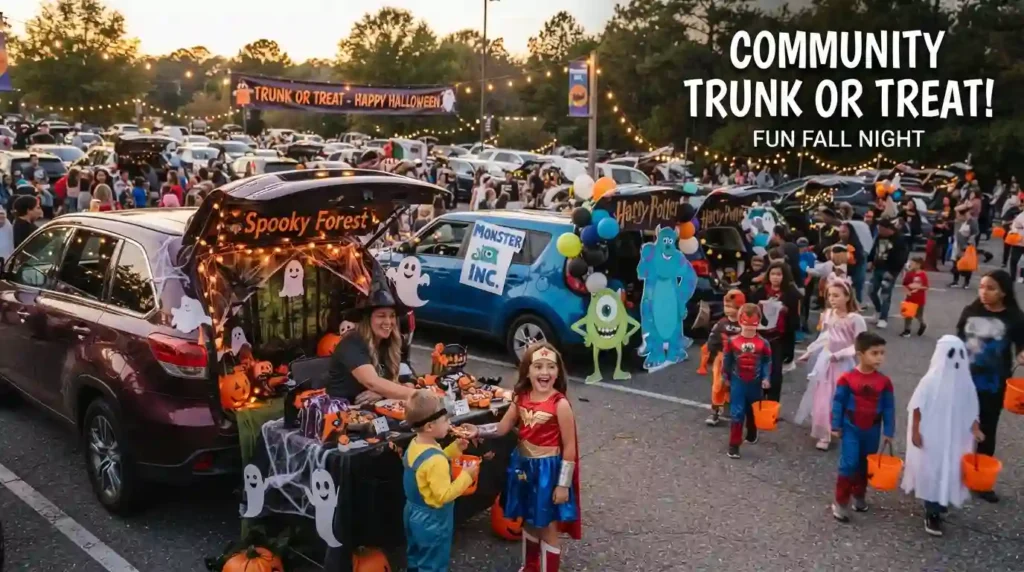
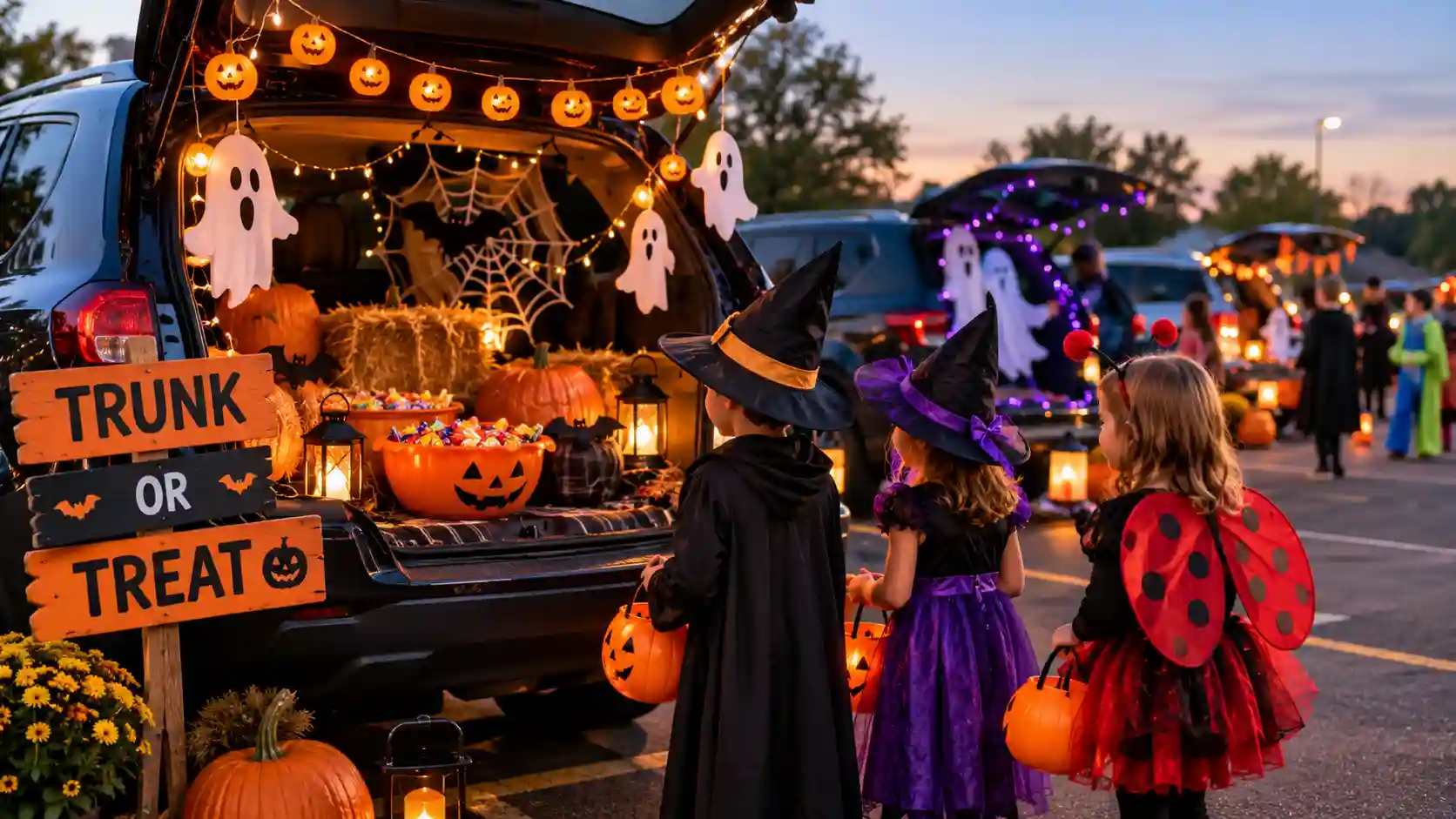
A trunk or treat theme is a decoration concept built around your car’s trunk or truck bed, designed so kids can walk from car to car and collect candy safely in a parking lot.
Popular examples include:
- Movie and TV themes – superheroes, Star Wars, Disney classics
- Classic Halloween themes – haunted graveyard, witch’s kitchen, mad scientist lab
- Kid-friendly themes – underwater ocean, candy land, dinosaur world
- Group or family themes – circus, pirate ship, camping and s’mores
- Simple low-effort themes – spiderweb trunk, pumpkin patch, pop-up ghost town
The best theme is one you can build with items you already own, plus a few dollar-store extras.
The Origin of Trunk or Treat
Trunk or treat began in the United States in the 1990s. Parents and churches wanted a safer, more controlled alternative to walking door to door, especially in rural areas where houses sit far apart. Cars would park together in a lot, open their trunks, and decorate them like mini Halloween stations.
The name itself is a play on “trick or treat,” swapping “trick” for “trunk” since the car trunk became the centerpiece of the activity. There’s no complicated word history here — it’s a modern, homegrown American phrase, not one borrowed from old English or another language. That’s also why spelling debates around it are more about style than tradition.
British English vs American English Spelling
Most keyword spelling battles come from real British-versus-American differences, like “colour” versus “color.” Trunk or treat is different, because the event itself is largely American. Still, three real variations show up in searches and writing:
| Version | Region/Style | Notes |
| Trunk or treat | US, general use | Most common spelling, no hyphens |
| Trunk-or-treat | US, formal/editorial | Hyphenated when used as an adjective, e.g. “trunk-or-treat event” |
| Boot or treat | UK, informal | British cars have a “boot,” not a “trunk,” so some UK events use this name instead |
The hyphen rule follows standard English grammar. When “trunk or treat” describes a noun that follows it, writers often hyphenate: “our trunk-or-treat event.” When it stands alone as the name of the activity, no hyphen is needed: “We’re going trunk or treating.”
Which Spelling Should You Use?
- In the US: Use “trunk or treat” without hyphens for casual writing, flyers, and social posts. Add hyphens only in formal writing when the phrase directly describes a noun, such as “trunk-or-treat safety guidelines.”
- In the UK or Commonwealth countries: If you’re organizing the event locally, “boot or treat” is instantly clearer to your audience, since “trunk” isn’t common British vocabulary for a car.
- For global or online audiences: Stick with “trunk or treat.” It’s the version most recognized worldwide, even where the event itself isn’t common, because of US media and social content.
Common Mistakes with Trunk or Treat Themes
- Choosing a theme that’s too complex. Elaborate builds look great in photos but often collapse under real event conditions like wind or rushed setup time.
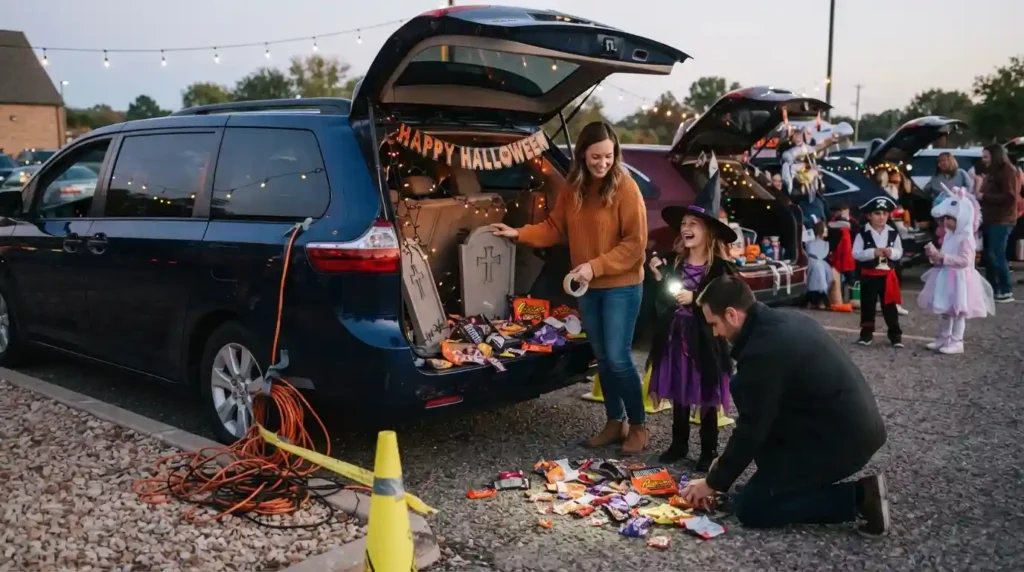
- Forgetting nighttime visibility. A theme that looks amazing in daylight can vanish in the dark without string lights or battery lanterns.
- Ignoring candy logistics. A big decorated trunk with no clear candy station confuses kids and slows the line down.
- Skipping a safety check. Cords, popped-up decorations, and open flames (real candles) are common hazards at these events.
- Misspelling it inconsistently. Mixing “trunk or treat,” “trunk-or-treat,” and “trunk n’ treat” across flyers looks unprofessional and can hurt searchability if you’re promoting the event online.
Trunk or Treat Themes in Everyday Examples
- In a school email: “Please decorate your trunk with a family-friendly theme by 5 PM. No scary or gory themes, please.”
- In a news article: “Local churches teamed up this weekend for a community-wide trunk-or-treat event, drawing over 300 families.”
- On social media: “Our trunk or treat theme this year: 80s arcade! Who’s ready? “
- In formal event planning docs: “All trunk-or-treat participants must register their theme in advance for safety approval.”
Trunk or Treat Themes Google Trends & Usage Data

Search interest for “trunk or treat themes” rises sharply every September and peaks in the two weeks before Halloween, almost entirely within the United States. States with strong search volume tend to be ones with larger suburban and rural populations, where the safety and convenience of a parking-lot event matters most.
Searches for “boot or treat” appear occasionally in the UK, but volume is far smaller, since the tradition itself hasn’t spread widely outside North America. Globally, most non-US search traffic for this keyword comes from people researching the tradition out of curiosity rather than planning to host one.
Keyword Variation Comparison
| Keyword Variation | Common Region | Typical Use Case |
| Trunk or treat themes | US | General search, event planning |
| Trunk-or-treat themes | US (formal) | Blog posts, official event materials |
| Boot or treat themes | UK | Local British events |
| Trunk n treat themes | US (informal) | Casual social media posts |
FAQs
1. What is the most popular trunk or treat theme?
Movie and superhero themes consistently rank as the most popular, since they’re recognizable and easy to build with existing toys and costumes.
2. How much should I spend on a trunk or treat theme?
Most simple, effective themes cost under $30 using dollar-store decorations, cardboard, and items already at home.
3. Do I need to decorate the inside of my trunk too?
Yes, ideally. Judges and kids often look inside the trunk, so lining it with fabric, lights, or a themed backdrop adds impact.
4. Is “trunk or treat” the same in the UK?
Not officially. The event is far less common there, and when it happens, it’s sometimes called “boot or treat” instead.
5. Can I reuse last year’s trunk or treat theme?
Yes. Reusing a theme is fine, especially if you add new details, since most kids won’t remember your exact setup from the year before.
6. What’s a good theme for a group of cars decorating together?
Coordinated themes work well, such as each car representing a different Disney movie or a different decade.
7. How early should I start planning my trunk or treat theme?
Two to three weeks before the event gives enough time to gather supplies without last-minute stress.
Conclusion
Trunk or treat themes don’t need to be complicated to be memorable. A clear idea, a few solid decorations, and good visibility at night will beat an overly ambitious build every time. The keyword itself carries almost no real spelling controversy — “trunk or treat” is standard in the US, “trunk-or-treat” fits formal writing, and “boot or treat” serves British audiences using their own car vocabulary.
If you’re in the US, keep your spelling simple and consistent across flyers and posts. If you’re organizing internationally, choose the term your local audience will instantly understand. Most importantly, focus on a theme you can realistically build, light well, and enjoy setting up, since that’s what actually makes a trunk or treat station stand out in a crowded parking lot.
Whether you’re picking your first theme or refining one you’ve used for years, the goal stays the same: safe, simple, and fun for every kid who walks up to your trunk.

Zainab Noor is a passionate content writer specializing in grammar and English language topics. With 2 years of experience, she creates clear, engaging, and SEO-friendly content that helps readers understand grammar, improve their writing skills, and use English with greater confidence.