You saw a flyer at your kid’s school. Or a post from your local fire department. It says “Truck or Treat” this Saturday. You pause. Is that a typo? Did they mean “Trunk or Treat”? Or is this a different event altogether?
This mix-up happens every October. Many people search “truck or treat” because they hear the phrase spoken out loud, or they see it printed on a sign, and it sounds almost the same as another term they already know: “trunk or treat.” The two words, “truck” and “trunk,” are close enough in sound and spelling that confusion is common, especially for parents scanning event flyers fast or for people new to the tradition.
Here is the short answer. Both phrases exist. They are not simply two spellings of one word, like “color” and “colour.” They describe two related but different kinds of Halloween events. One is far more common. The other is a real, separate event that some communities host on purpose.
In this guide, you will get a quick answer first. Then you will learn where this confusion comes from, how the terms compare, common mistakes, real examples, and answers to frequent questions.
Truck or Treat Quick Answer
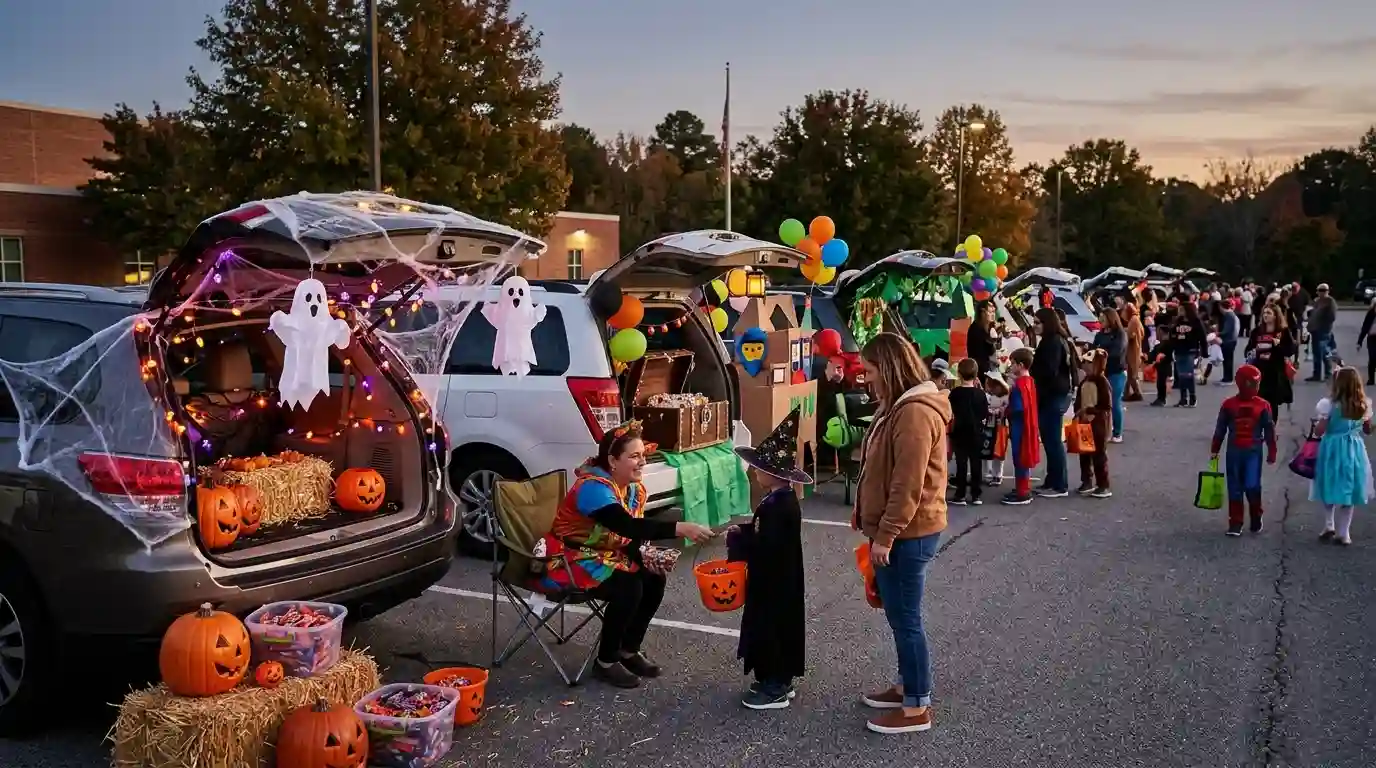
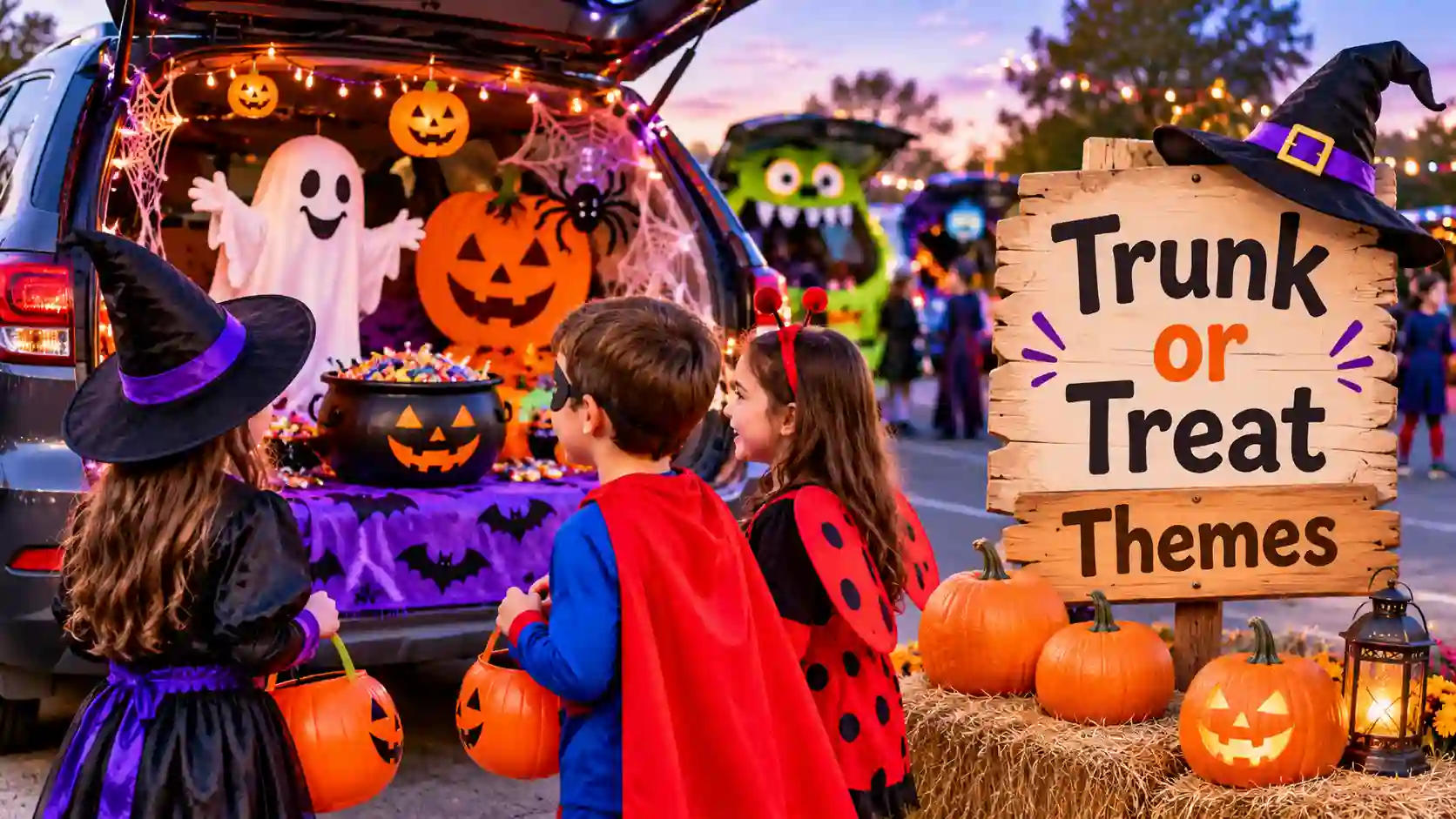
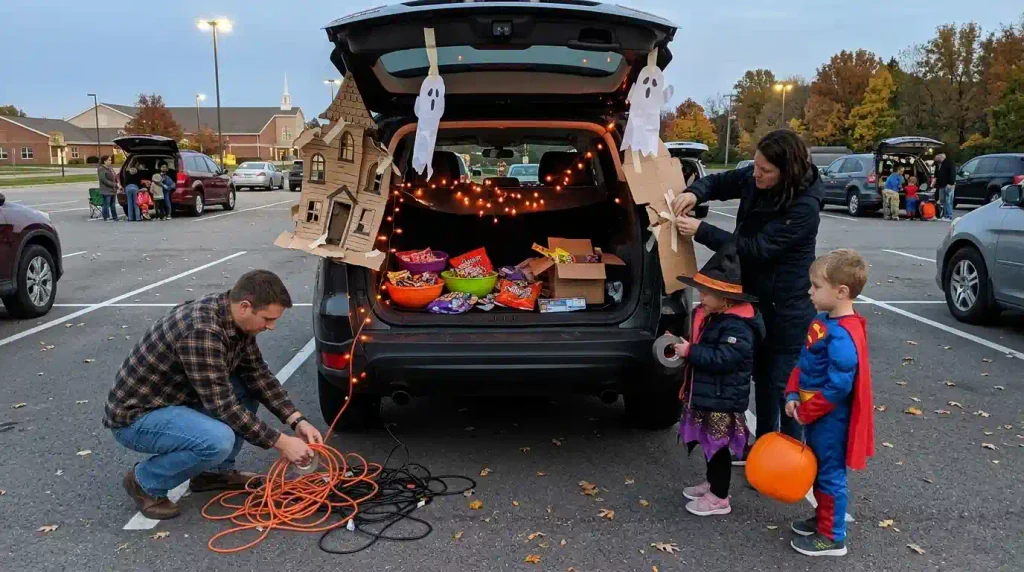
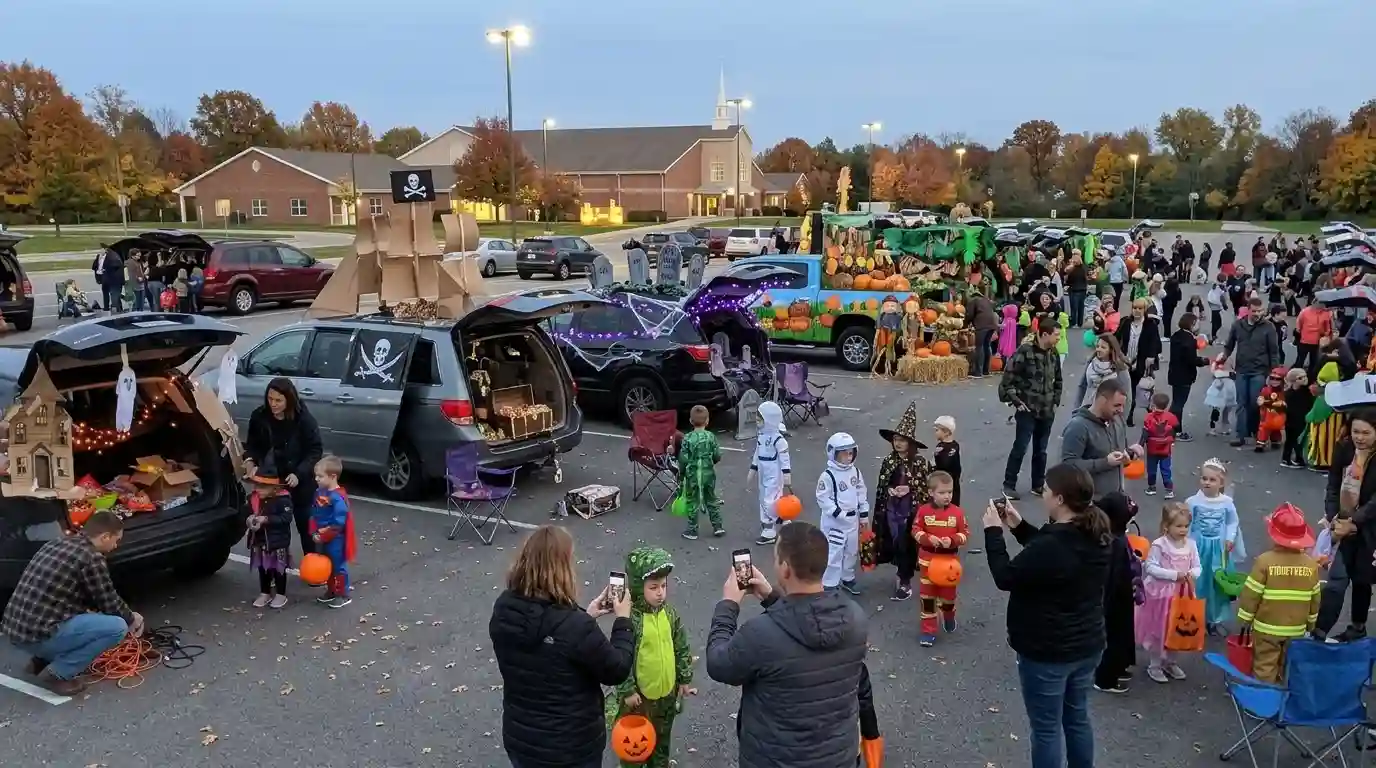
Trunk or treat is the standard, well-known term. It describes a Halloween event where cars park in a lot, open their trunks, and decorate them. Kids walk from car to car and collect candy from each trunk, instead of going door to door.
Truck or treat is a real but less common term. Some events use this name on purpose, usually when the event features actual trucks, like fire trucks, farm trucks, or big work trucks, instead of car trunks. Kids walk from truck to truck for candy and often get to see the vehicles up close.
Examples:
- “Our church is hosting a trunk or treat in the parking lot this Friday.” (cars with open trunks)
- “The fire station’s truck or treat lets kids see fire trucks and grab candy.” (actual trucks)
The Origin of “Truck or Treat”
This is not a case of one word splitting into two spellings over centuries, like many English word pairs. It is a modern mix-up, and the story is simple.
“Trick or treat” is the original Halloween phrase. Children go door to door, say “trick or treat,” and receive candy. This phrase has been used in the US since at least the 1930s.
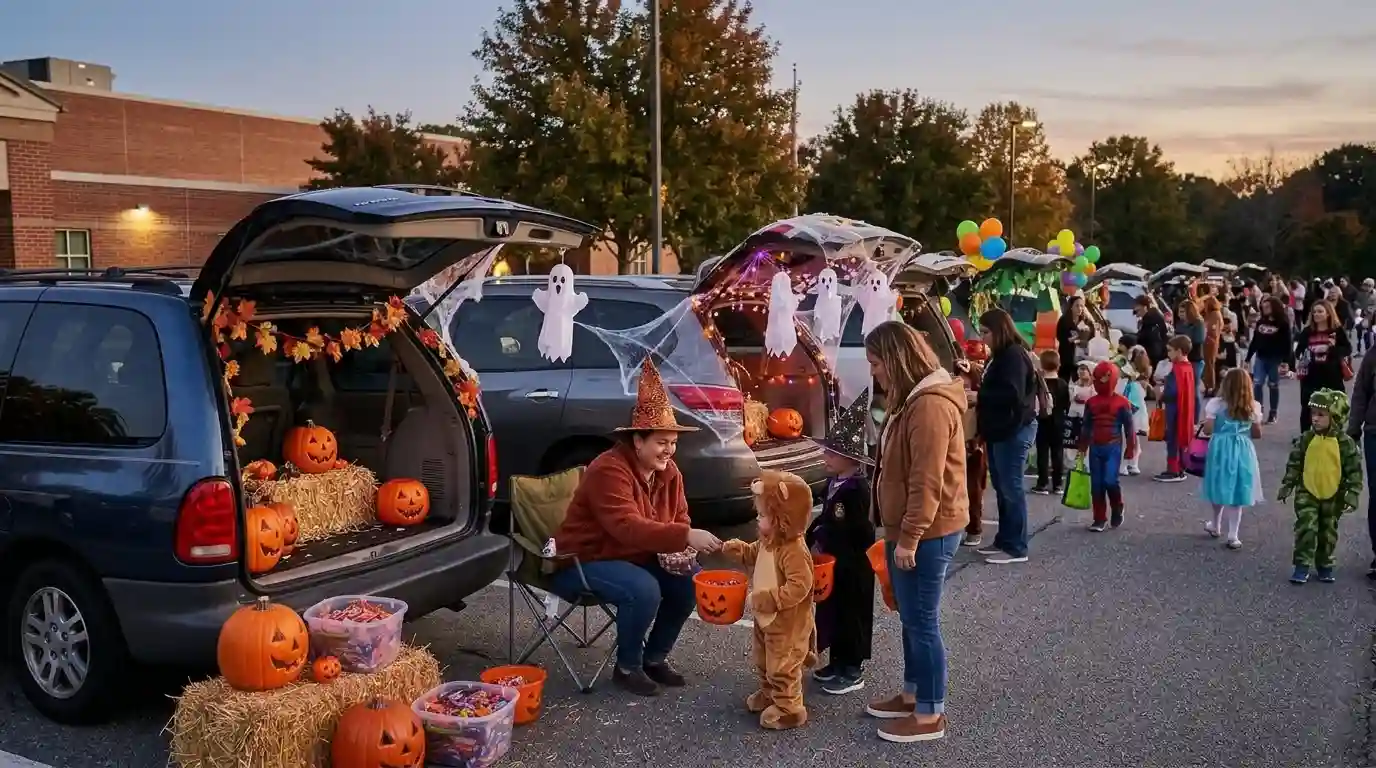
“Trunk or treat” started later, likely in the 1990s and 2000s, often organized by churches, schools, and community groups. The idea was to create a safer, more controlled version of trick-or-treating. Instead of walking door to door in the dark, families gather in one lot. Car owners decorate their open trunks, and kids walk safely from car to car.
“Truck or treat” grew out of this same idea, but for events centered on trucks instead of cars. Fire departments, farms, and truck dealerships sometimes host these events, letting kids see big vehicles up close while collecting candy.
The confusion between “truck” and “trunk” happens for one main reason: the words look and sound alike, especially when spoken quickly or written on a handmade sign. Many people who search “truck or treat” are actually trying to find information about “trunk or treat,” simply because they misheard or misremembered the word.
Is There a British vs. American Version?
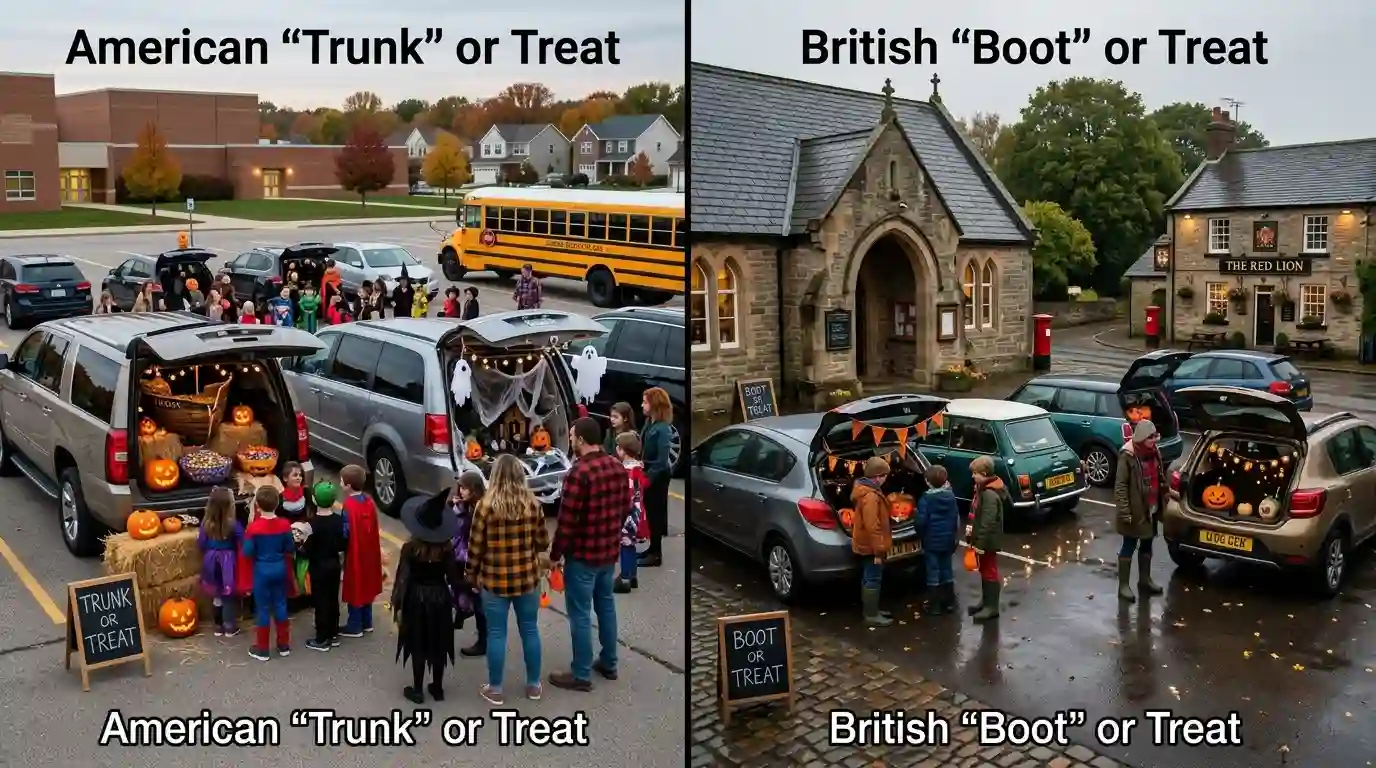
This is where the pattern is different from most spelling-confusion pairs. There is no British English or American English version of “truck or treat” or “trunk or treat,” because Halloween trunk events are mainly an American and Canadian tradition. The UK and other Commonwealth countries do not commonly use either phrase.
There is one related word difference worth knowing, though. It is not about “truck or treat” itself, but about the base words:
| Word | American English Meaning | British English Meaning |
| Truck | A large vehicle for hauling goods | Same meaning, but “lorry” is also common |
| Trunk | The back storage area of a car | Usually called the “boot” |
| Trunk or treat | A common Halloween car-trunk event | Rarely used; not a common UK tradition |
| Truck or treat | A less common Halloween event with trucks | Rarely used; not a common UK tradition |
What to remember: In the UK, a car’s back storage space is called the “boot,” not the “trunk.” So even if “trunk or treat” events spread to the UK, the name itself might cause even more confusion there, since “trunk” is not the everyday British word for that part of a car.
Which Term Should You Use?
Since this is not a regional spelling choice, pick your term based on what the event actually is.
Organizing a car-based Halloween event? Use “trunk or treat.” This is the widely recognized term, and most parents and search engines will understand it right away.
Organizing an event with real trucks, like fire trucks or farm equipment? Use “truck or treat.” This name accurately tells people what to expect and helps you stand out from a typical trunk or treat.
Writing for a US or Canadian audience? Either term works, as long as it matches your event. “Trunk or treat” will be more familiar to most readers.
Writing for a UK or global audience? Explain the concept clearly, since the tradition itself may be unfamiliar. Consider adding a short description, like “a car-park Halloween event,” alongside the term.
Not sure which term your readers are searching for? Use “trunk or treat” as your main term, and mention “truck or treat” once in your content to catch readers who misspell or mishear it.
Common Mistakes with Truck or Treat
Here are the errors people make most often.
1. Using “truck or treat” when they mean the common car-trunk event.
- Confusing: “Come to our truck or treat and open your trunk for candy!”
- Clearer: “Come to our trunk or treat and open your trunk for candy!”
2. Assuming “truck or treat” is always a typo.
It is not always a mistake. Some events are genuinely built around trucks. Read the event details before assuming it is an error.
3. Mixing the two terms in one flyer or post.
- Confusing: “Join our truck or treat! Decorate your trunk and park by 5 PM.”
- Clearer: “Join our trunk or treat! Decorate your trunk and park by 5 PM.”
4. Forgetting to explain the event to newcomers.
Many people, especially outside North America, have never heard of either term. A short explanation avoids confusion.
5. Typing the wrong word from memory.
Because “truck” and “trunk” look and sound alike, people often type the wrong one without noticing, especially in a fast social media post or text message.
Truck or Treat in Everyday Examples
In emails
- “Reminder: Our school’s trunk or treat is this Friday from 5 to 7 PM. Please decorate your trunk by 4:30.”
- “The fire department’s truck or treat will let kids climb into a real fire truck this year.”
In news writing
- “Dozens of families gathered for the community trunk or treat, where cars lined the lot with spooky decorations.”
- “The annual truck or treat at the fairgrounds gave kids a chance to see tractors and fire trucks up close.”
On social media
- “Who’s coming to trunk or treat this weekend?? Bring your best decorated car! 🎃”
- “Our truck or treat this year has THREE fire trucks. Kids are going to love it!”
In formal writing
- Event flyer: “Join us for our annual Trunk or Treat, hosted in the church parking lot.”
- Local government notice: “The city’s Truck or Treat event will feature vehicles from the fire and public works departments.”
Truck or Treat Google Trends & Usage Data
I can’t give you exact search numbers here, because they change over time. But the general pattern is easy to see and easy to check.
What the pattern shows:
- “Trunk or treat” is searched far more often than “truck or treat” overall, since it is the established, widely used term.
- “Truck or treat” searches still happen regularly, both from people mistyping or mishearing the term, and from people specifically looking for truck-based events.
- Both terms spike sharply in the weeks leading up to Halloween, usually starting in early October.
By country:
- United States and Canada: Both terms appear, with “trunk or treat” as the dominant search term in almost every region.
- United Kingdom and other Commonwealth countries: Search interest in either term is very low, since the tradition itself is not common there.
How to check the latest data yourself:
- Go to Google Trends.
- Type “trunk or treat” and add “truck or treat” to compare.
- Set your country and a date range that includes September and October.
- Check the “Related queries” box for phrases like “trunk or treat near me” or “truck or treat ideas.”
Why this matters for SEO: many readers who type “truck or treat” are actually looking for “trunk or treat” content. A clear, upfront explanation, like the Quick Answer section above, helps you capture both groups of searchers.
Truck or Treat vs Trunk or Treat vs Trick or Treat – Side-by-Side Comparison
| Term | What It Means | How Common | Example |
| Trick or treat | Door-to-door candy collecting | Very common | “The kids went trick or treating around the block.” |
| Trunk or treat | Car-trunk candy event in a parking lot | Common | “We’re hosting a trunk or treat at the school.” |
| Truck or treat | Truck-based candy event, often with fire or farm trucks | Less common | “The fire station’s truck or treat was a big hit.” |
| Truck-or-treat (as a typo) | Misspelling of “trunk or treat” | Common mistake | Should usually be corrected to “trunk or treat” |
Frequently Asked Questions
Is it truck or treat or trunk or treat?
Both exist, but they mean different things. “Trunk or treat” is the common car-trunk event. “Truck or treat” is a real but less common event built around actual trucks.
Is “truck or treat” just a misspelling?
Sometimes, yes. But not always. Some events are genuinely named “truck or treat” because they feature trucks instead of car trunks.
What happens at a trunk or treat?
Cars park in a lot and open their decorated trunks. Kids walk from car to car and collect candy, instead of going door to door.
What happens at a truck or treat?
Kids walk from truck to truck, often seeing fire trucks, farm trucks, or work trucks up close, while collecting candy at each stop.
Why do people confuse “truck” and “trunk”?
The two words sound alike and are easy to mix up when spoken quickly or written by hand. Many people simply mishear or misremember the correct term.
Is trunk or treat a British tradition?
No. It is mainly an American and Canadian tradition. It is not common in the UK or other Commonwealth countries, and “trunk” is not even the usual British word for a car’s storage area.
Which term should I use for my event flyer?
Use “trunk or treat” if your event uses car trunks. Use “truck or treat” only if your event is centered on actual trucks, so people know what to expect.
Conclusion
So, is it truck or treat or trunk or treat? Now you know both terms are real, but they are not simply two spellings of one word.
Here are the key points. “Trunk or treat” is the well-known, common term for a car-trunk Halloween event. “Truck or treat” is a smaller but genuine term used for events built around real trucks, like fire trucks or farm vehicles. This confusion is not a British versus American spelling issue, since neither term is commonly used in the UK. It comes from how similar “truck” and “trunk” sound and look.
If you are planning or writing about a car-trunk event, use “trunk or treat” to match what most people search for and expect. If your event truly features trucks, “truck or treat” is the clearer, more accurate name. Either way, a short description of what the event actually involves will help any reader, whether they already know the tradition or are hearing about it for the first time.

Zainab Noor is a passionate content writer specializing in grammar and English language topics. With 2 years of experience, she creates clear, engaging, and SEO-friendly content that helps readers understand grammar, improve their writing skills, and use English with greater confidence.