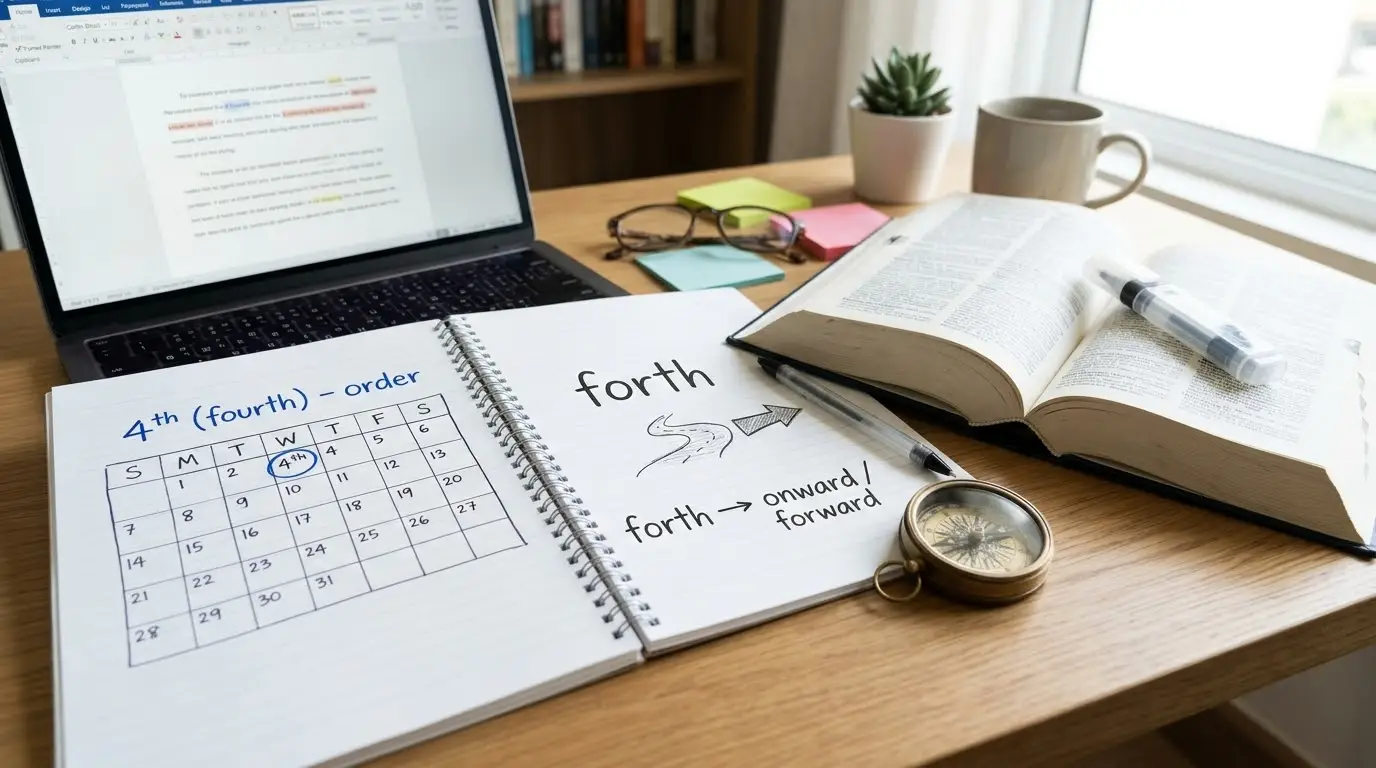
You’re typing a date, like “July fourth,” or telling someone to move “forth” with a plan. You pause. Are these the same word spelled differently, or something else entirely? Autocorrect doesn’t always catch the mix-up, and both words look and sound almost identical.
This is one of the most common word-confusion questions in English. People search for it while writing dates, invitations, business emails, or essays. The mistake is easy to make because “fourth” and “forth” sound exactly alike when spoken, a classic case of homophones, words that sound the same but have different spellings and meanings.
Unlike true spelling variations (like “color” versus “colour”), this isn’t a regional difference at all. “Fourth” and “forth” are two completely different words with two completely different jobs in a sentence. Mixing them up doesn’t just look like a typo, it can actually confuse your reader about what you mean.
This article gives you the quick answer, explains where each word comes from, and shows you exactly when to use each one. By the end, you’ll never mix them up again.
Fourth or Forth Quick Answer

“Fourth” and “forth” are different words with different meanings. They are not interchangeable.
- Fourth refers to the number 4 in a sequence (an ordinal number).
- “She finished fourth in the race.”
- “Today is the fourth of July.”
- Forth means “forward” or “onward,” describing movement or continuation.
- “The soldiers marched forth into battle.”
- “From this day forth, things will be different.”
If you’re counting or referring to a position or date, use “fourth.” If you’re describing movement forward or onward, use “forth.”
The Origin of Fourth and Forth

Both words trace back to Old English, but they come from completely different roots.
“Fourth” comes from the Old English word feorða, related to the number feower (“four”). It has always functioned as an ordinal number, describing position in a sequence, fourth in line, fourth place, the fourth day of the month.
“Forth” comes from the Old English word forð, meaning “forward” or “onward.” It has always been an adverb, describing direction or movement away from a starting point, as in “go forth” or “back and forth.”
The confusion between the two exists purely because they sound identical when spoken aloud. English has many homophone pairs like this (such as “there” and “their,” or “to,” “too,” and “two”), where pronunciation overlaps but spelling and meaning stay completely separate. There’s no historical merging or shared origin between “fourth” and “forth,” they simply evolved to sound alike over time.
British English vs American English Spelling
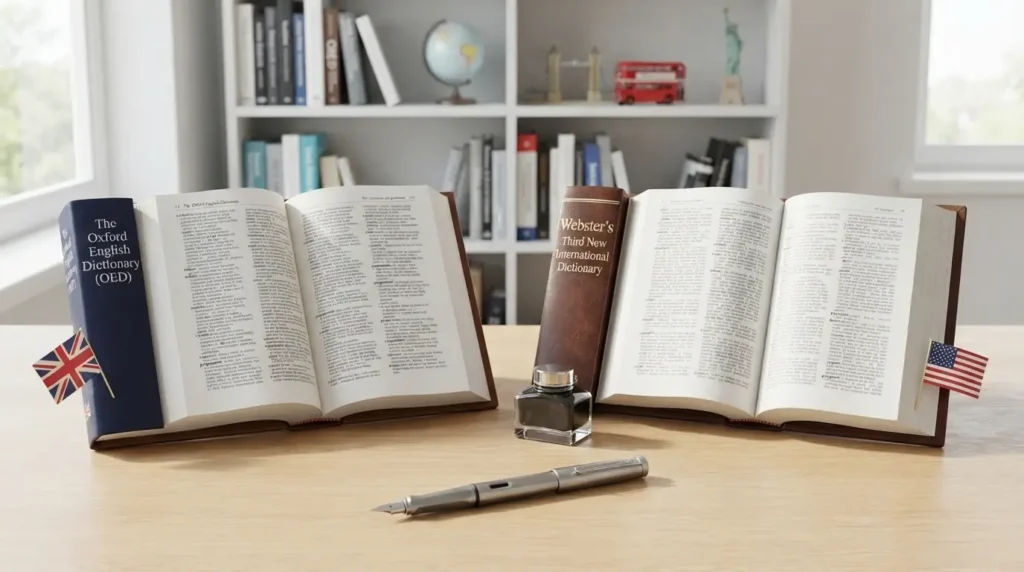
There is no regional spelling difference here. Both American and British English use “fourth” and “forth” identically, with the same meanings and same rules.
| Word | American English | British English |
| Ordinal number (4th) | fourth | fourth |
| Meaning “forward/onward” | forth | forth |
| Common phrase example | “the fourth of July” | “the fourth of June” |
| Common phrase example | “back and forth” | “back and forth” |
Since this is a meaning-based distinction rather than a spelling variation, there’s nothing for American or British English to disagree on. Both dialects use the exact same spelling rules for each word.
Which Word Should You Use?
- US writers: Use “fourth” for numbers, dates, and positions. Use “forth” for movement or continuation, regardless of formality.
- UK and Commonwealth writers (UK, Australia, Canada, India): The same rule applies exactly. There’s no regional variation to consider here.
- Global and academic writers: Focus on meaning, not region. Ask yourself: am I counting or referring to a position (fourth), or describing forward movement (forth)?
A simple trick: if you can replace the word with “forward” and the sentence still makes sense, use “forth.” If you’re referring to a number or order, use “fourth.”
Common Mistakes with “Fourth” and “Forth”

- Writing “forth” instead of “fourth” in dates : A very common error: “the forth of July” should always be “the fourth of July.”
- Writing “fourth” instead of “forth” in movement phrases : Writing “back and fourth” instead of the correct “back and forth.”
- Relying on autocorrect : Spellcheck often won’t catch this mistake since both words are spelled correctly, just used in the wrong context.
- Confusing “forth” with “fourth” in formal invitations : Wedding invitations and event announcements frequently misspell dates, writing “forth” when they mean the number “fourth.”
- Mixing them up in idioms : Phrases like “and so forth” are often mistakenly written as “and so fourth.”
Fourth and Forth in Everyday Examples
In emails: “Our meeting is scheduled for the fourth of next month. Please confirm your availability.”
In news: “The mayor called on residents to move forth with the city’s new recycling initiative.”
In social media: “Happy Fourth of July! I hope everyone has a great celebration today. 🎆”
In formal writing: “The committee resolved to proceed forth with the proposed budget changes, effective the fourth quarter of this fiscal year.”
Fourth or Forth Google Trends & Usage Data
Search interest in “fourth or forth” rises sharply around early July each year in the United States, tied directly to the Fourth of July holiday, when people frequently double-check the correct spelling for invitations, social posts, and marketing materials.
Outside of that seasonal spike, searches for the difference between the two words remain steady year-round, driven mostly by writers, students, and non-native English speakers working to avoid this common homophone mistake. The United States shows the highest search volume for “fourth,” largely due to the national holiday, while global searches for “forth” tend to relate more to formal or literary writing, phrases like “back and forth” or “from this day forth.”
Keyword Variation Comparison Table
| Variation | Meaning | Common Use |
| Fourth | Ordinal number (4th) | Dates, rankings, positions |
| Forth | Forward or onward | Movement, continuation |
| Fourth of July | US holiday reference | Dates, events |
| Back and forth | Idiom for movement | Conversations, negotiations |
| And so forth | Idiom meaning “etcetera” | General speech and writing |
FAQs
1. What is the difference between “fourth” and “forth”?
“Fourth” refers to the number 4 in a sequence, while “forth” means “forward” or “onward.”
2. Is “the forth of July” correct?
No. The correct spelling is “the Fourth of July,” referring to the fourth day of the month.
3. How do you remember which word to use?
Think of “fourth” as related to “four” (the number). Think of “forth” as related to “forward” (movement).
4. Are “fourth” and “forth” pronounced the same?
Yes, they are homophones, meaning they sound identical when spoken, even though they’re spelled differently and mean different things.
5. Is “and so fourth” correct?
No. The correct phrase is “and so forth,” meaning “and other similar things.”
6. Does British English use these words differently than American English?
No. Both American and British English use “fourth” and “forth” with identical meanings and no regional variation.
7. Why do so many people mix up these two words?
Because they sound exactly alike when spoken, it’s an easy mistake to make in writing, especially since spellcheck tools often won’t catch the error.
Conclusion
“Fourth” and “forth” are not different spellings of the same word, they are two entirely separate words with different meanings and different jobs in a sentence. “Fourth” refers to the number 4 in a sequence, while “forth” means “forward” or “onward.” The confusion happens because the two words are homophones, sounding identical despite their different spellings and origins.
Unlike true regional spelling differences, there’s no British-versus-American variation here. Both dialects use these words the exact same way. The key to getting it right every time is remembering the connection: “fourth” relates to “four,” and “forth” relates to “forward.”
Whether you’re writing a date, an invitation, a business email, or a casual social media post, taking a moment to check which word fits your meaning will keep your writing clear and mistake-free.

Haleema Sadia is a passionate content writer specializing in wishes, greetings, messages, and heartfelt quotes. With 3 years of experience, she creates warm, engaging, and SEO-friendly content that helps readers find the perfect words to celebrate special moments and express their feelings.