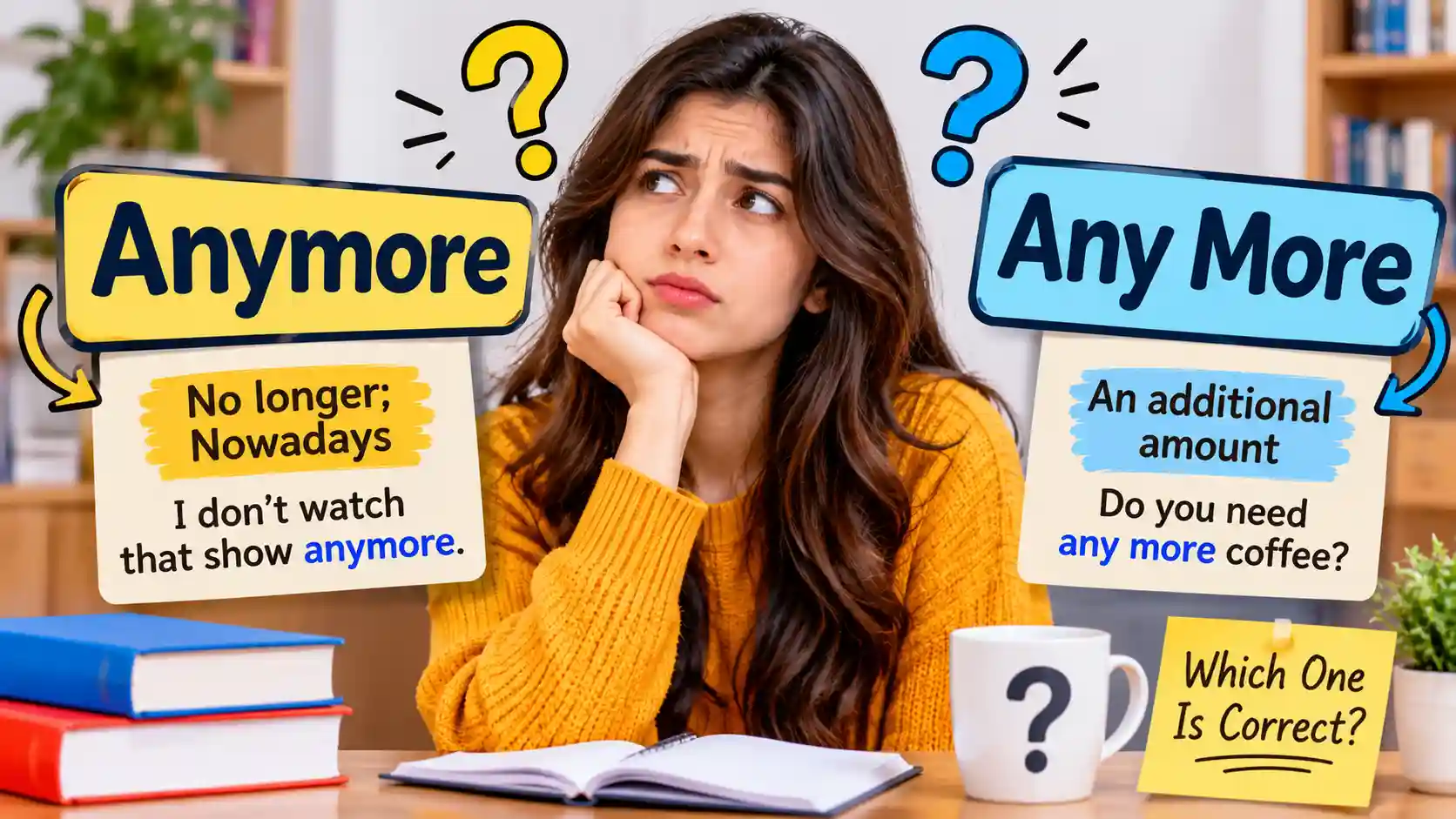
Have you ever stopped while writing and wondered whether anymore or any more is the correct choice? You are not alone. These two forms look almost the same, but they do not always work in the same way. The difference becomes especially confusing because both forms are correct, depending on how you use them.
In everyday English, anymore usually means “nowadays” or “from now on,” especially in negative sentences. For example, “I don’t watch that show anymore.” On the other hand, any more usually refers to an additional amount or number, as in “Do you need any more time?”
This small spacing difference can change the meaning of a sentence. That is why writers often search for anymore or any more when checking emails, schoolwork, social media posts, and formal writing.
In this guide, you will learn the difference between the two forms, where they came from, how British and American English use them, and how to choose the right form with confidence.
Anymore or Any More Quick Answer
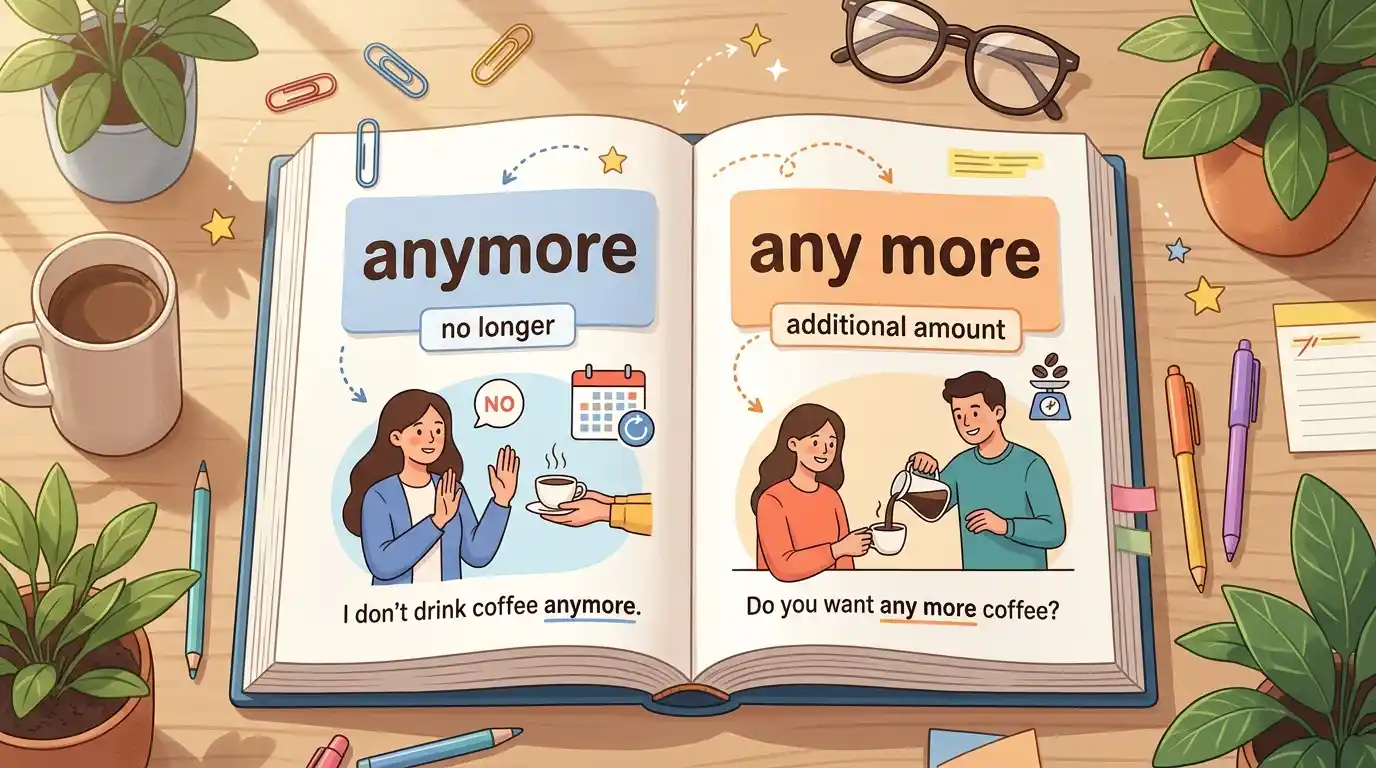
Both anymore and any more are correct, but they have different uses.
Anymore is usually an adverb. It often means “from now on” or “nowadays,” mainly in negative sentences.
- I don’t play tennis anymore.
- She doesn’t live here anymore.
- We don’t use that software anymore.
Any more is usually used when talking about an additional amount or number.
- Do you need any more water?
- Would you like any more information?
- I don’t have any more questions.
Quick Comparison
| Form | Main use | Example |
| Anymore | From now on; nowadays | I don’t use it anymore. |
| Any more | An additional amount or number | Do you need any more help? |
A simple trick can help. If you can replace the phrase with “any longer” or “nowadays,” use anymore.
I don’t use it anymore.
I don’t use it any longer.
If you mean an additional amount, use any more.
Do you need any more coffee?
The Origin of Anymore and Any More
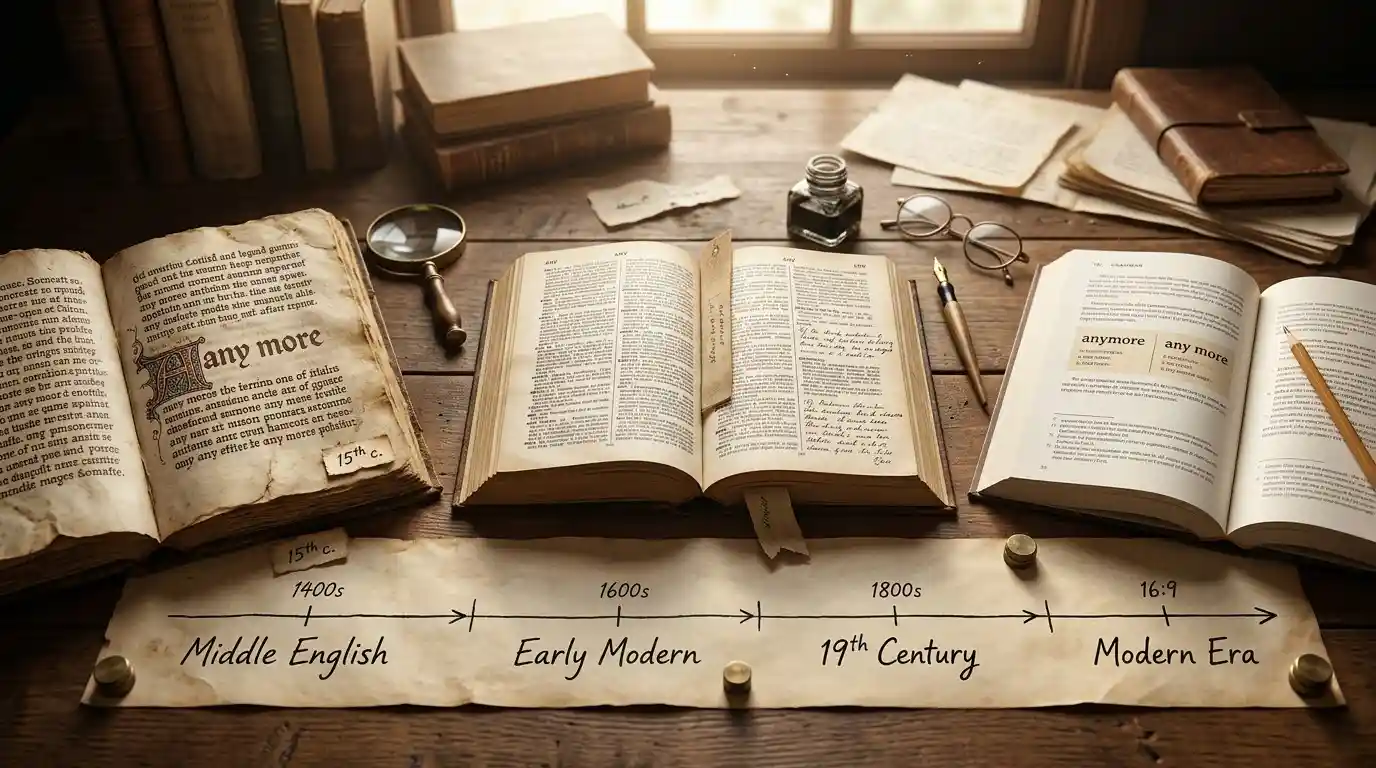
The difference between anymore and any more developed from the older use of the words any and more.
The word any has a long history in English. It comes from Old English ænig, which meant something like “any one” or “some one.” The word more also comes from Old English and has long referred to a greater amount or additional quantity.
Originally, English commonly wrote the two words separately. Over time, anymore developed as a single adverb in some varieties of English.
The one-word form became especially common in American English when it meant “nowadays” or “from this time forward.” For example:
I don’t visit that store anymore.
Meanwhile, any more remained common when the words kept their separate meanings:
Do you want any more cake?
This explains why both forms exist today. The spelling is not simply a matter of preference. The meaning and grammatical role usually determine which form works best.
British English vs American English Spelling
American and British English can differ in how they use anymore and any more.
American English commonly uses anymore as an adverb meaning “nowadays” or “from now on.”
- I don’t go there anymore.
- They don’t sell that product anymore.
British English traditionally prefers any more in many of these situations, especially when the phrase means “any longer.”
- I don’t go there any more.
- They don’t sell that product any more.
However, modern British English also uses anymore in some contexts. Usage can vary by writer, region, and style.
Comparison Table
| Meaning or use | American English | British English |
| No longer | I don’t work there anymore. | I don’t work there any more. |
| Additional amount | Do you need any more? | Do you need any more? |
| Nowadays | People don’t write letters anymore. | People don’t write letters any more. |
| Formal writing | Follow your style guide. | Follow your style guide. |
The important point is that any more is still needed when you mean an additional amount.
For example:
Do you need any more paper?
Here, changing it to anymore would change the grammatical structure and meaning.
Which Spelling Should You Use?
Your choice depends on your meaning and your audience.
For American Readers
Use anymore when you mean “no longer” or “nowadays.”
- I don’t watch television anymore.
- She doesn’t work there anymore.
Use any more for an additional amount.
- Do you need any more details?
- We don’t have any more chairs.
For British and Commonwealth Readers
Any more is often the safer traditional choice when you mean “no longer.”
- I don’t live there any more.
- He doesn’t visit us any more.
For an additional amount, use any more as usual.
For a Global Audience
If your readers come from different English-speaking countries, focus on clarity. In particular, use any more when you mean an additional amount.
If you mean “no longer,” choose the form that matches your preferred variety of English and keep your usage consistent.
For professional content, also check the style guide used by your workplace, publication, or client.
Common Mistakes with Anymore or Any More
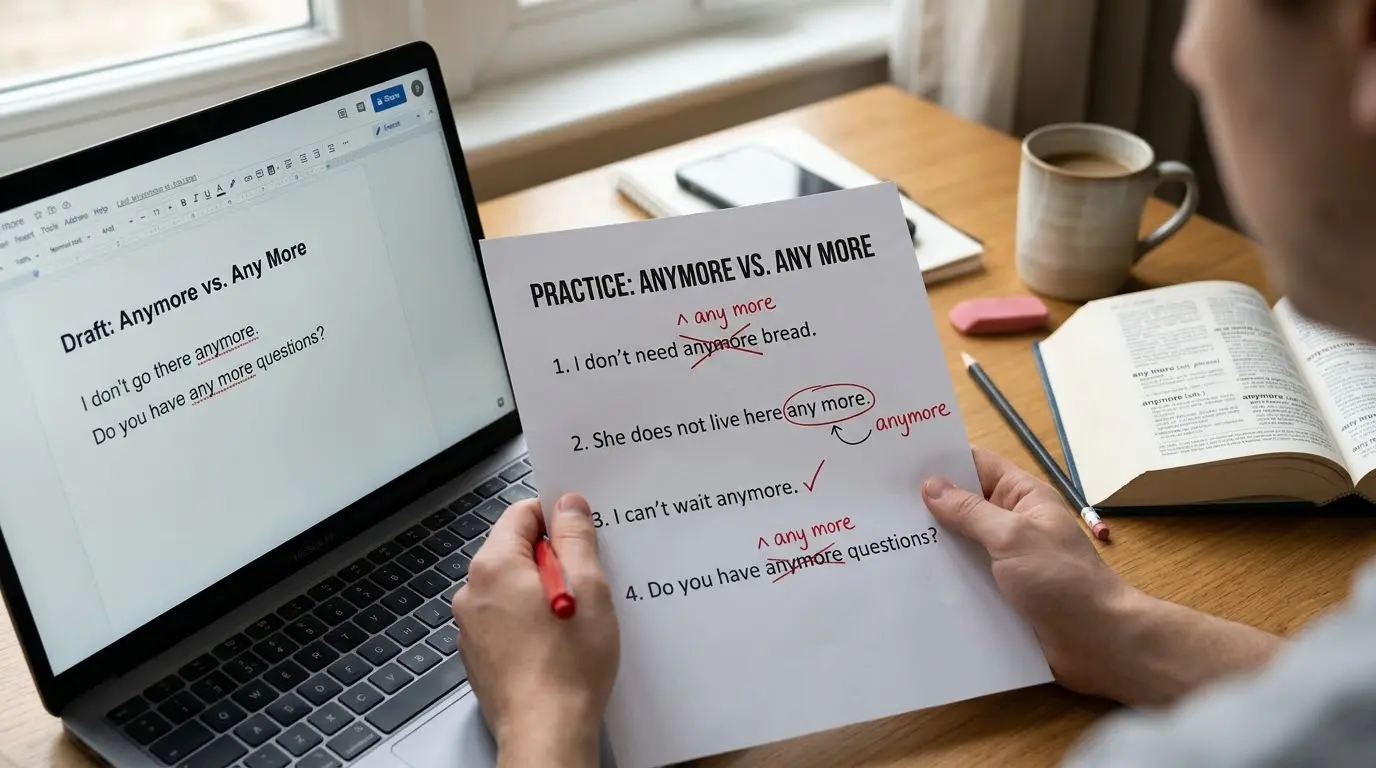
Writers often make a few common mistakes with these forms.
Mistake 1: Using “any more” for an additional amount incorrectly
Incorrect:
I don’t use that app any more features.
Better:
I don’t use that app anymore.
Or, if you mean additional features:
I don’t need any more features.
The intended meaning determines the form.
Mistake 2: Writing “anymore” for an additional quantity
Incorrect:
Do you need anymore information?
Better:
Do you need any more information?
Here, you are asking about an additional amount of information.
Mistake 3: Ignoring regional English
A sentence may look unusual to readers from another English-speaking region even when the meaning is clear.
For example:
I don’t visit that place any more.
This form is familiar in British English, while many American readers would expect:
I don’t visit that place anymore.
Mistake 4: Changing the meaning accidentally
Consider these sentences:
I don’t want any more.
I don’t want it anymore.
The first means the speaker does not want an additional amount. The second means the speaker no longer wants it.
The small space changes the meaning.
Anymore or Any More in Everyday Examples
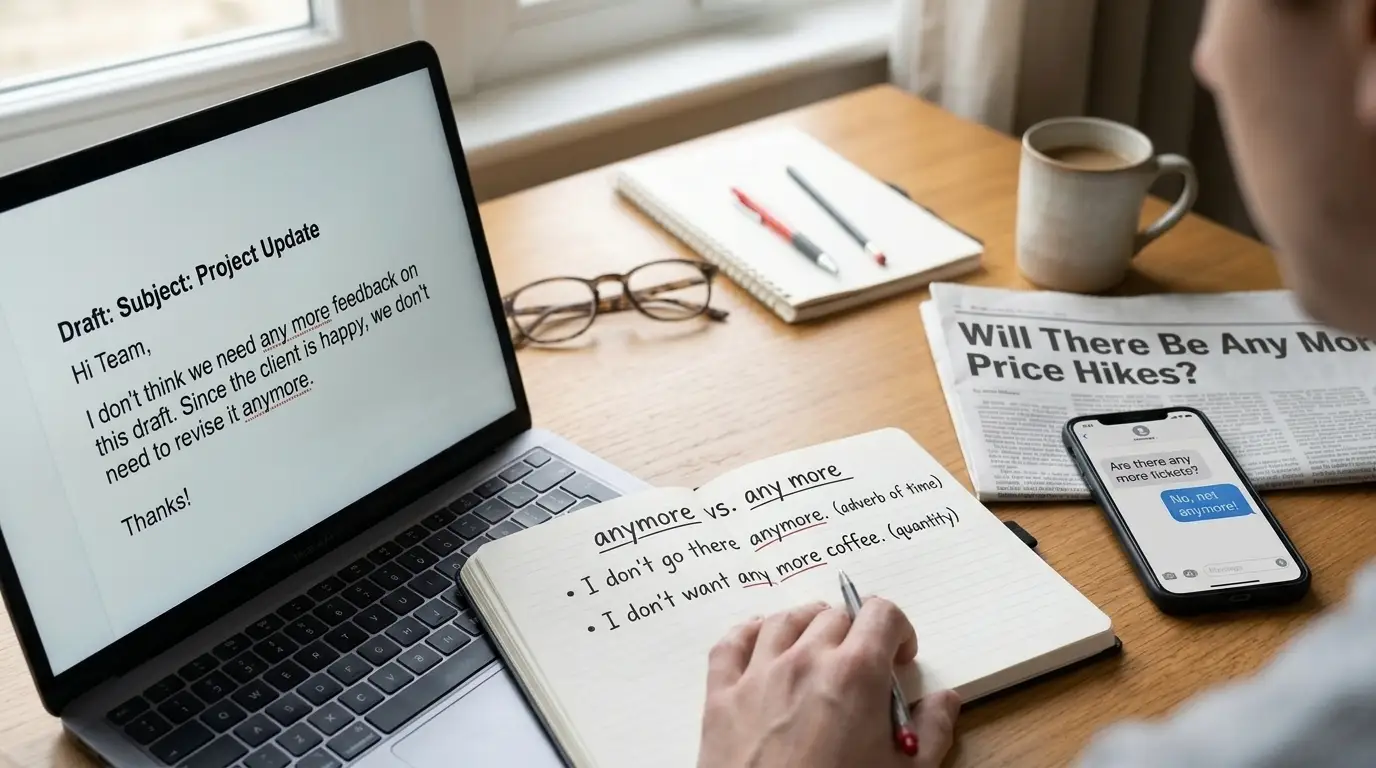
In Emails
Anymore:
I don’t use that email address anymore.
Any more:
Please let me know if you need any more information.
In News Writing
Anymore:
The company does not operate in that region anymore.
Any more:
Customers cannot purchase any more tickets after the deadline.
On Social Media
Anymore:
I don’t spend much time on social media anymore.
Any more:
I don’t think I can handle any more notifications today!
In Formal Writing
Anymore:
The organization no longer uses the previous system anymore.
A cleaner formal version would be:
The organization no longer uses the previous system.
Any more:
Please contact the office if you require any more information.
In formal writing, clarity matters more than trying to force one spelling into every situation.
Anymore or Any More Google Trends & Usage Data
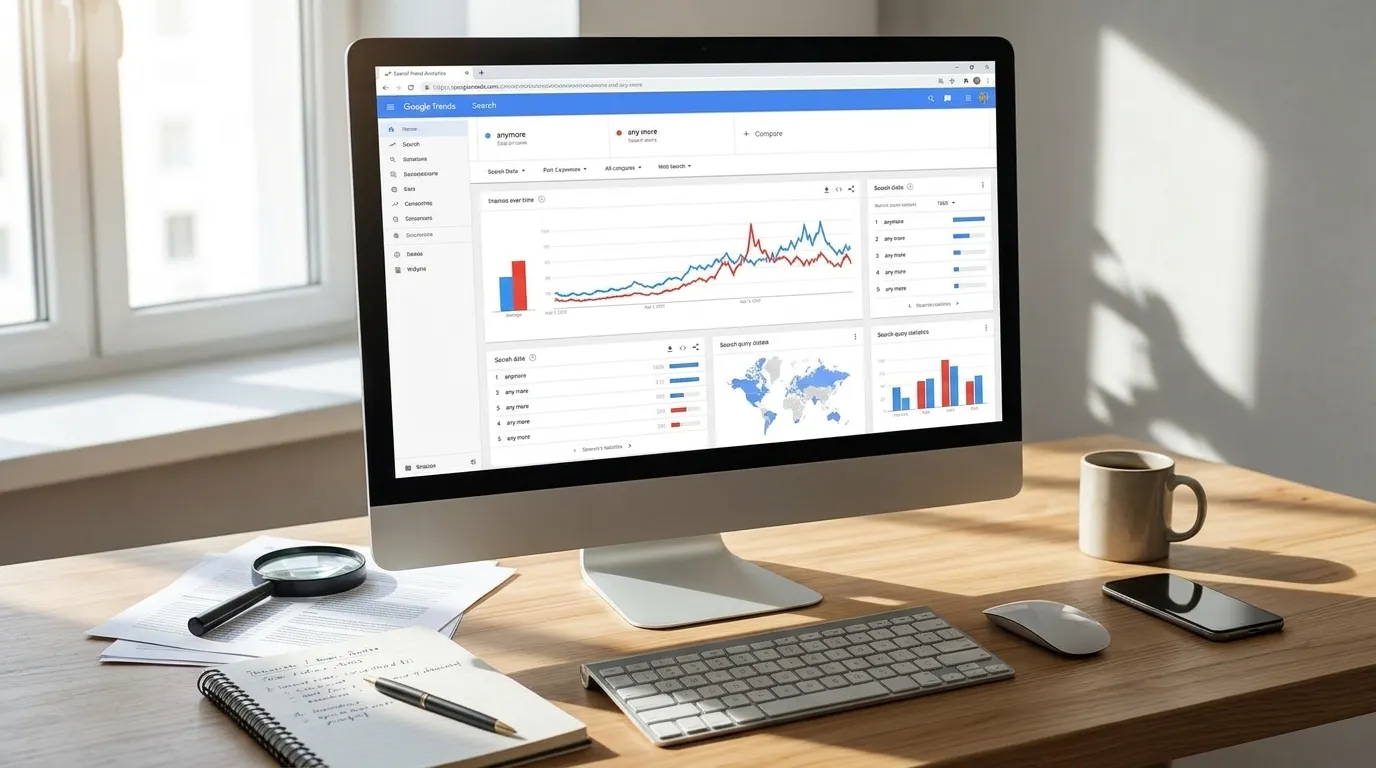
Search interest for anymore or any more reflects a common English usage question rather than a completely separate vocabulary issue.
Search patterns can vary by country. American users are more likely to encounter anymore as a single-word adverb because American English commonly uses it in sentences meaning “no longer.” British English often maintains the two-word form any more in similar constructions.
The phrase also appears in grammar searches because writers want to know whether the space changes the meaning.
Context matters greatly. Searches involving:
- anymore meaning
- any more meaning
- anymore vs any more
- is anymore one word
- any more or anymore grammar
usually come from people checking spelling, grammar, or regional usage.
Google Trends can change over time, so exact popularity should be checked for a specific country and date range before using it as a hard measure of language usage.
Anymore vs Any More: Side-by-Side Comparison
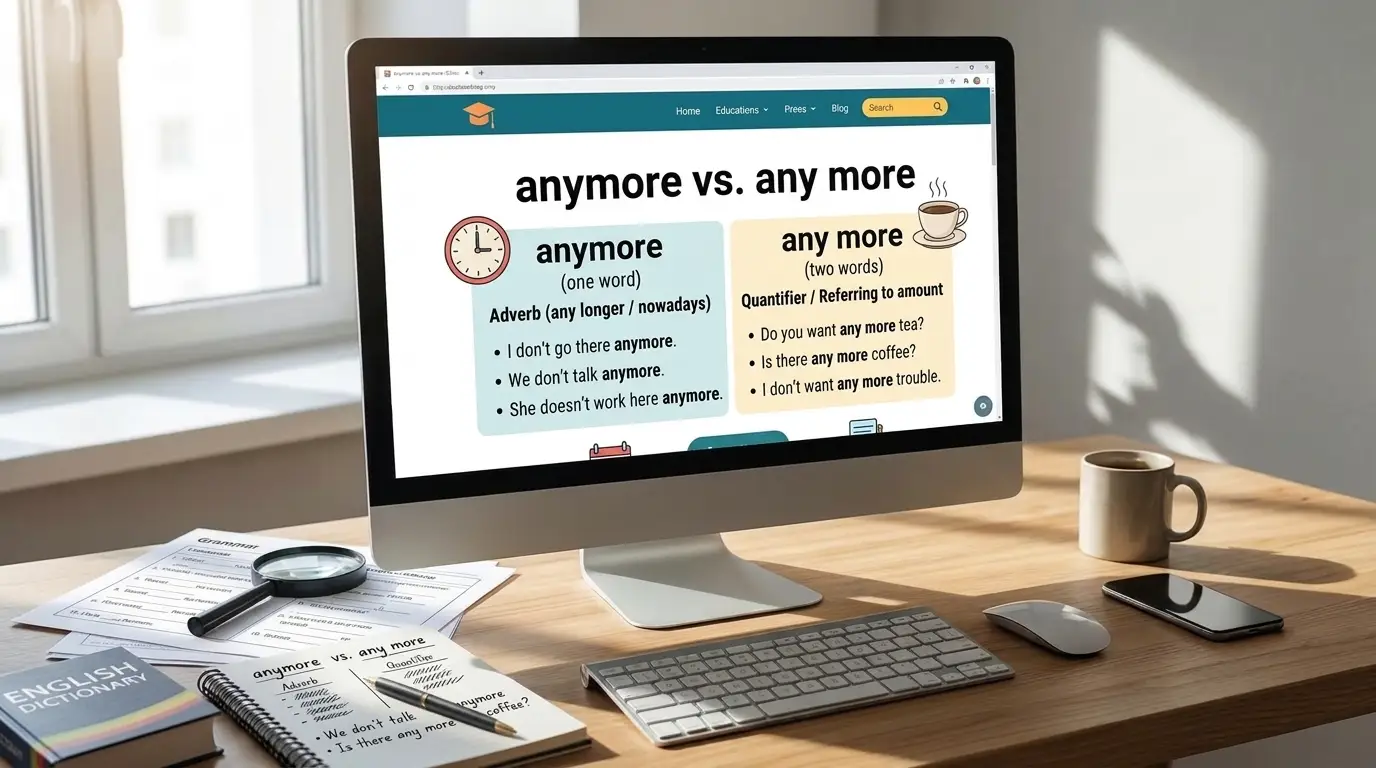
| Feature | Anymore | Any more |
| Form | One word | Two words |
| Common role | Adverb | Determiner/phrase |
| Main meaning | No longer; nowadays | Additional amount or number |
| Example | I don’t work there anymore. | Do you need any more help? |
| Common in American English | Yes | Yes |
| Common in British English | Used, but less traditional in this sense | Very common |
| Can replace with “any longer”? | Often yes | Usually no |
| Refers to extra quantity? | No | Yes |
FAQs About Anymore or Any More
1. Is “anymore” one word?
Yes. Anymore is a correct one-word form, especially when it means “no longer” or “nowadays.”
Example:
I don’t use that service anymore.
2. Is “any more” also correct?
Yes. Any more is correct when you mean an additional amount or number.
Example:
Do you need any more time?
3. Which is correct: “I don’t want anymore” or “I don’t want any more”?
Both can be correct, depending on meaning. I don’t want any more usually means you do not want an additional amount. I don’t want it anymore means you no longer want it.
4. Do British people use “anymore”?
British English uses anymore, but any more has traditionally been common when the phrase means “no longer.” Usage can vary among speakers and writers.
5. Do Americans use “any more”?
Yes. American English uses any more when referring to an additional amount or number.
Example:
Would you like any more coffee?
6. Can “anymore” mean “nowadays”?
Yes. In some American English contexts, anymore can mean “nowadays.”
Example:
People don’t write checks anymore.
7. How can I remember the difference?
Think about the meaning. If you mean “no longer,” use anymore in American English. If you mean “additional,” use any more.
Conclusion
The difference between anymore or any more becomes much easier once you focus on meaning instead of spelling alone. Anymore is commonly used as a one-word adverb meaning “no longer” or “nowadays,” especially in American English. Any more, however, usually refers to an additional amount or number and remains standard across English varieties.
For example, “I don’t need it anymore” means you no longer need something. In contrast, “I don’t need any more” means you do not need an additional amount. British English often uses any more where American English uses anymore to mean “no longer,” so regional style also matters.
When writing for a specific audience, follow the English variety your readers expect. For global or professional writing, focus on clear meaning and consistent usage. Most importantly, remember that the space can affect the meaning. Once you connect anymore with “no longer” and any more with “additional,” choosing the right form becomes much easier.

Zainab Noor is a passionate content writer specializing in grammar and English language topics. With 2 years of experience, she creates clear, engaging, and SEO-friendly content that helps readers understand grammar, improve their writing skills, and use English with greater confidence.